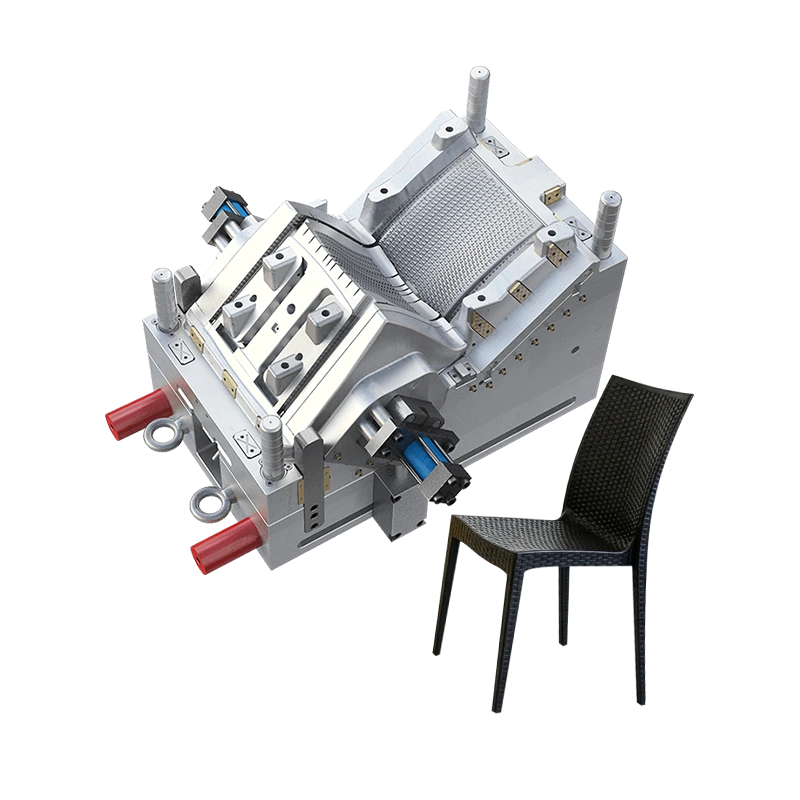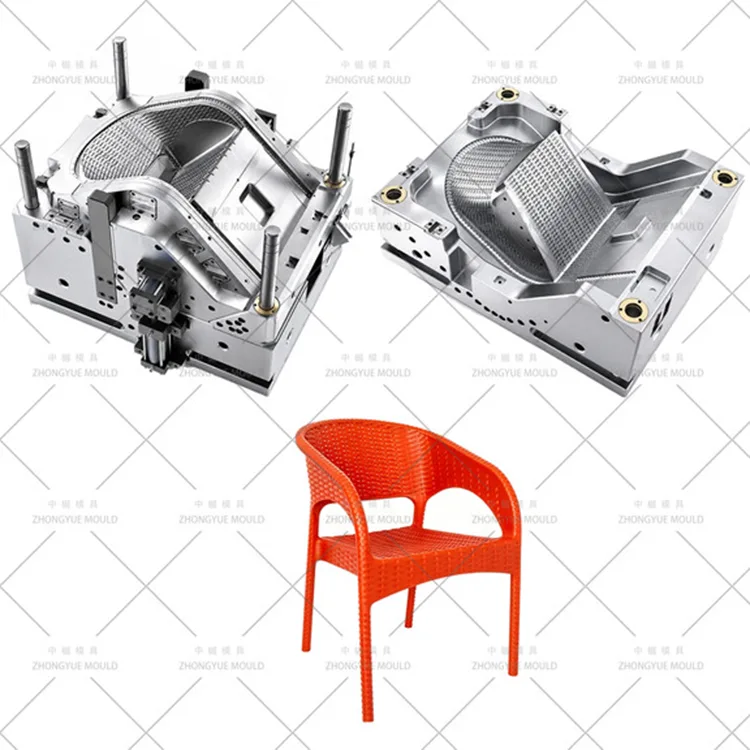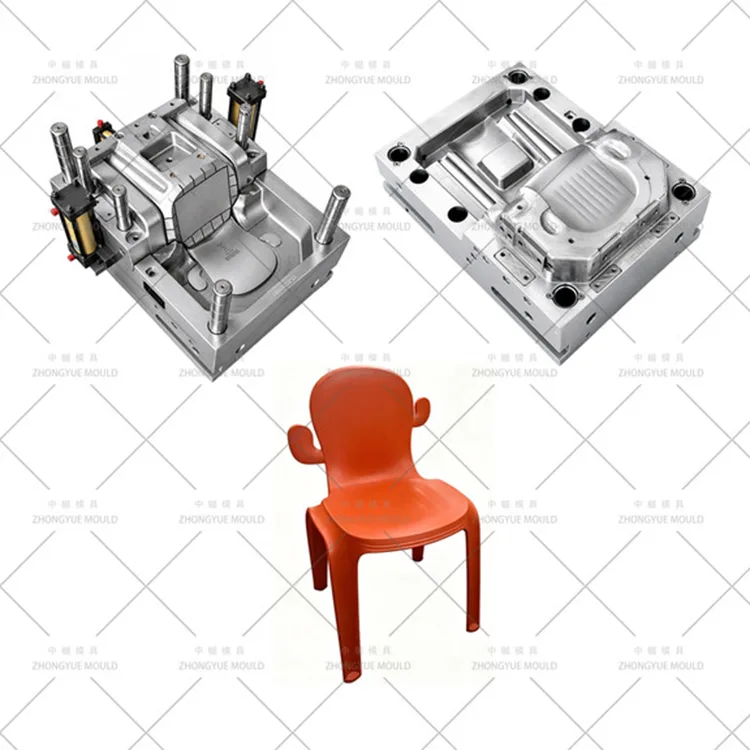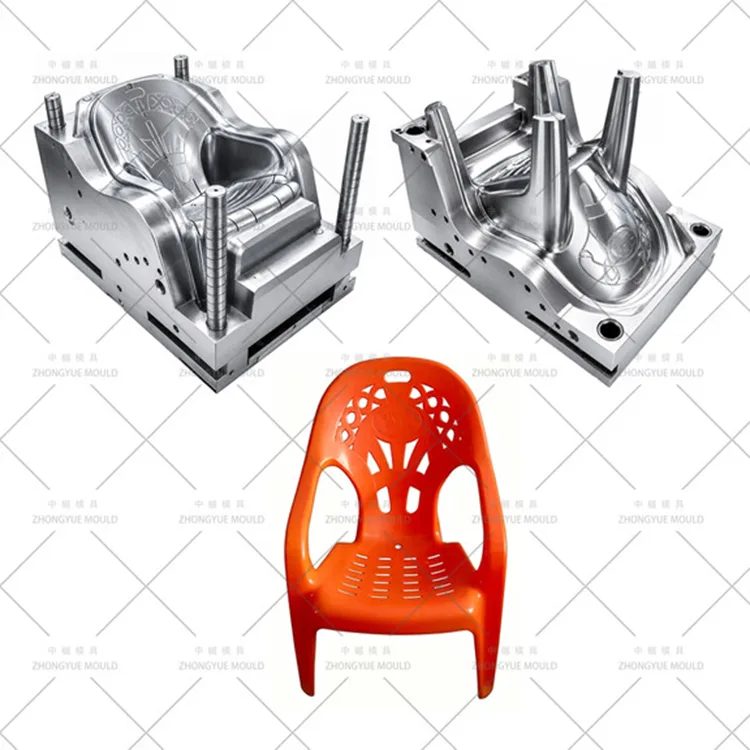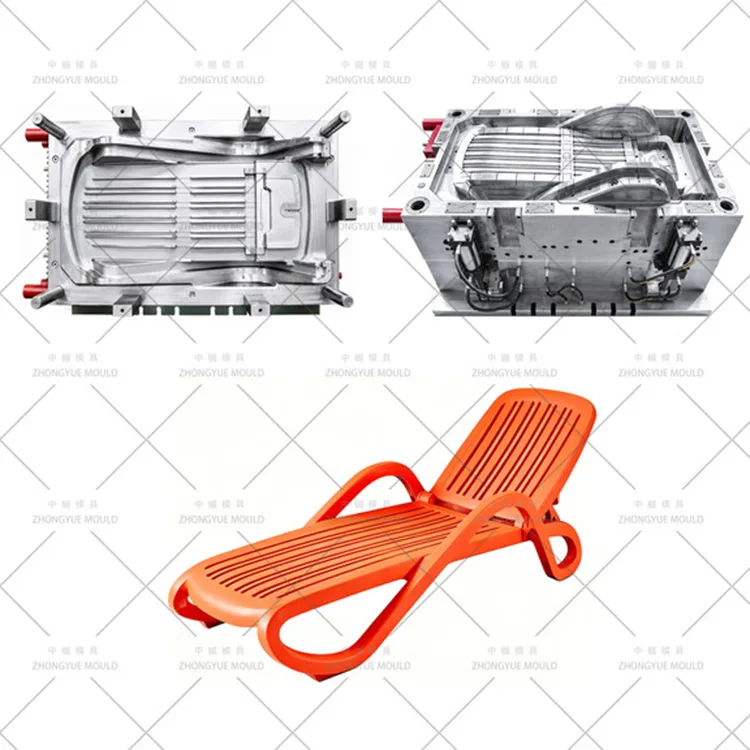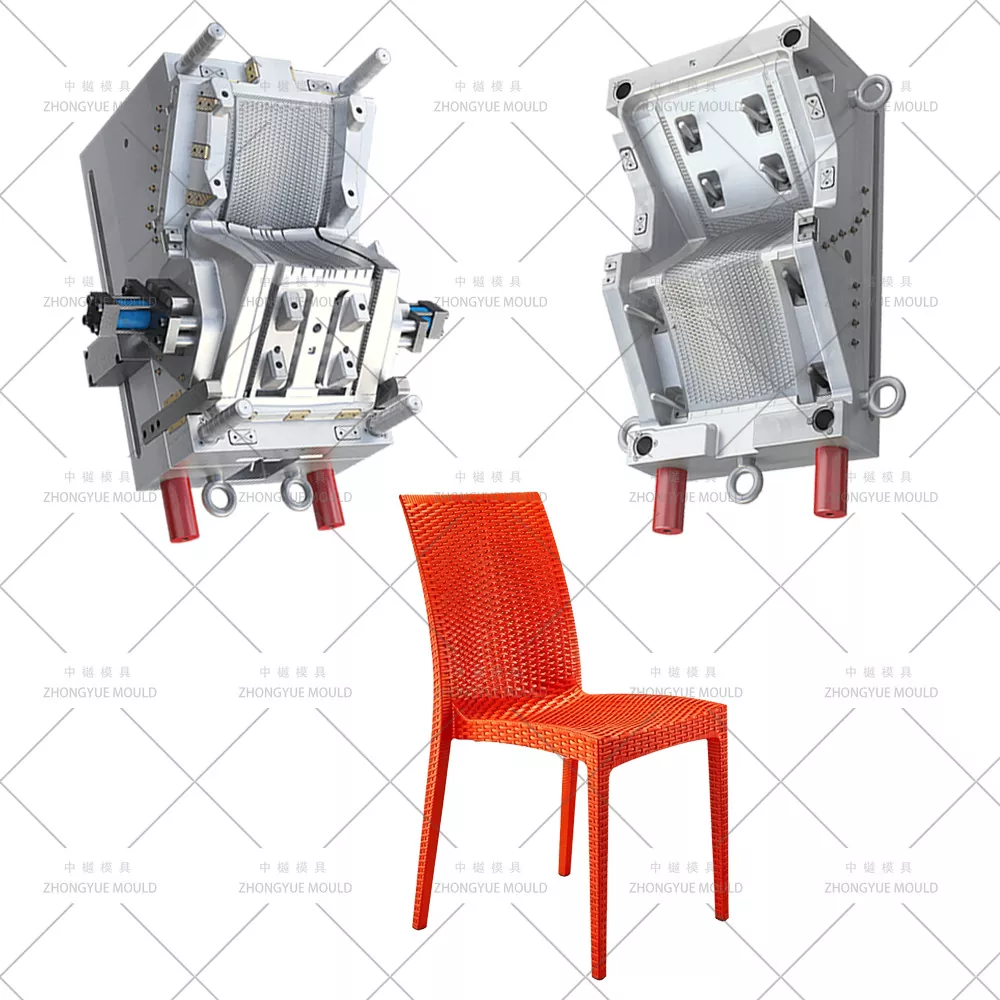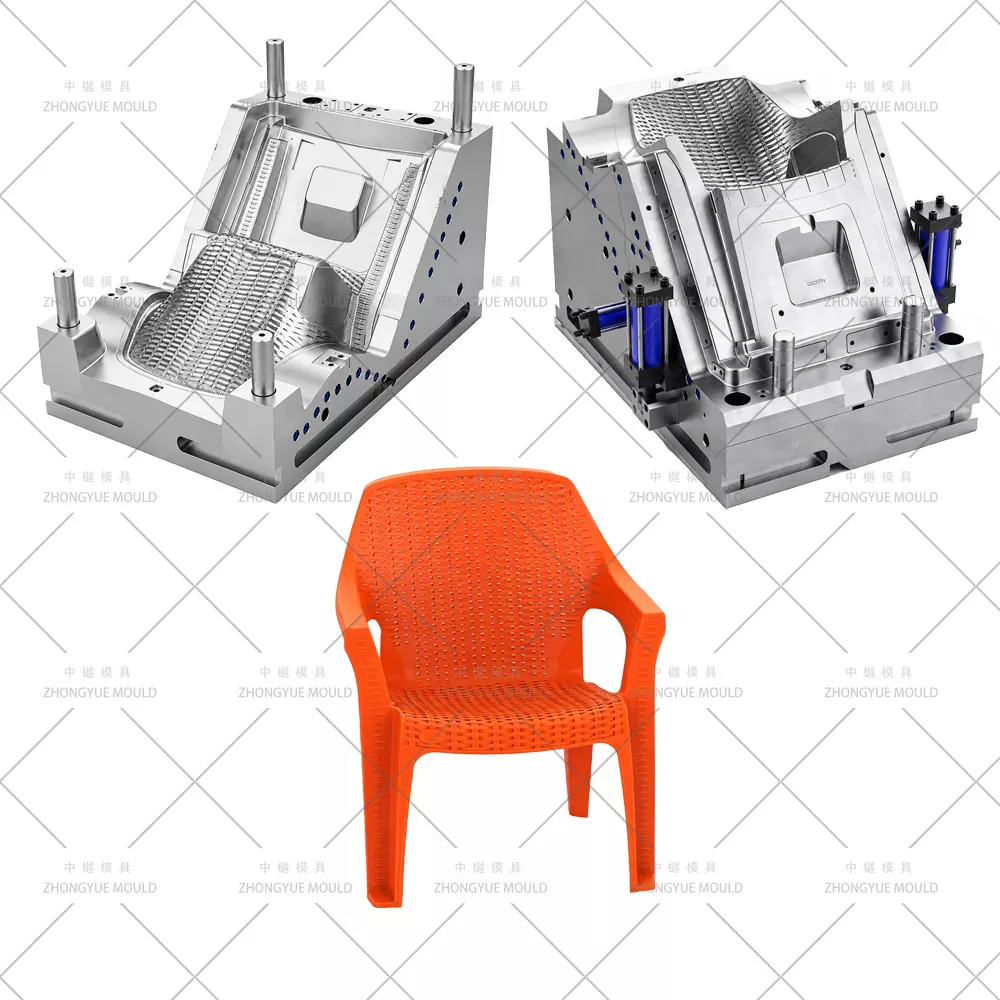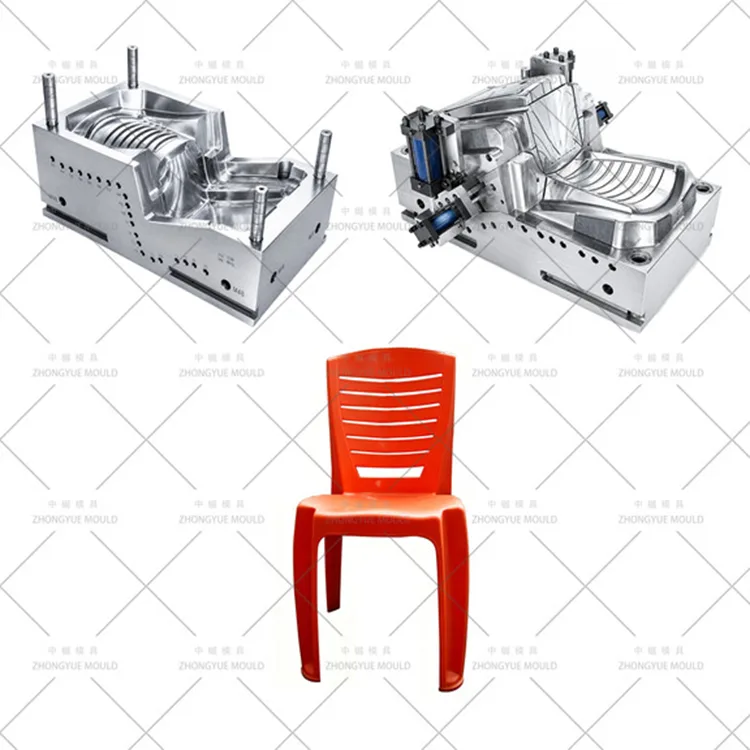
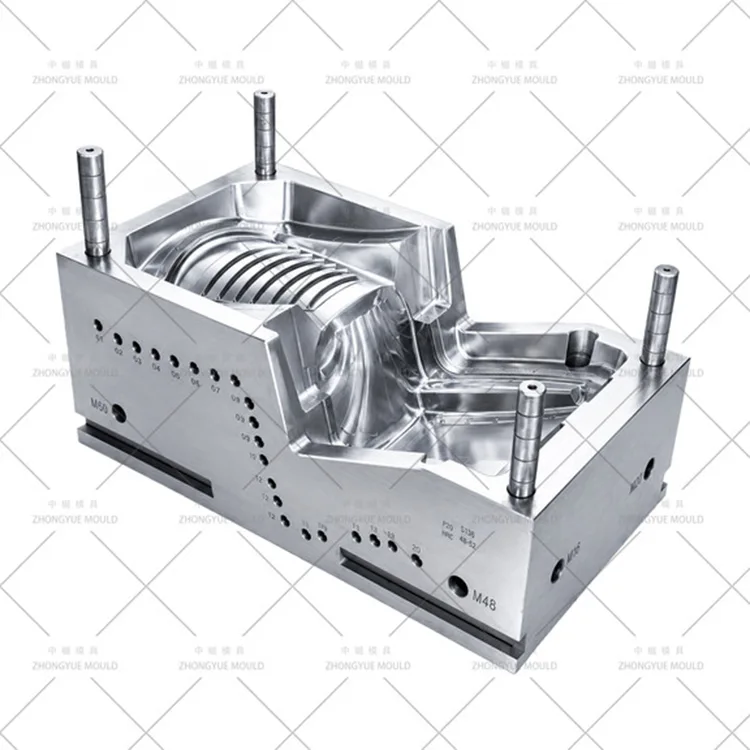
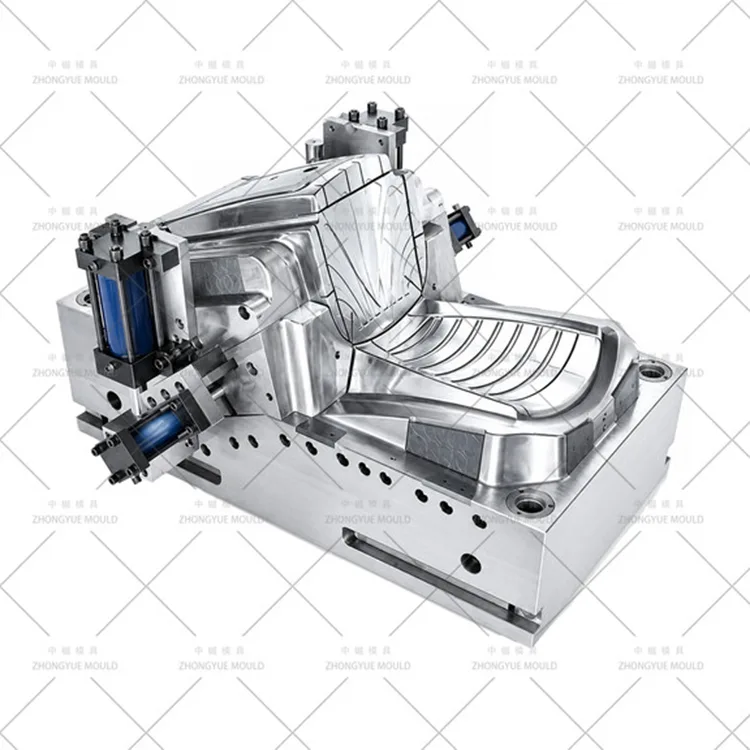
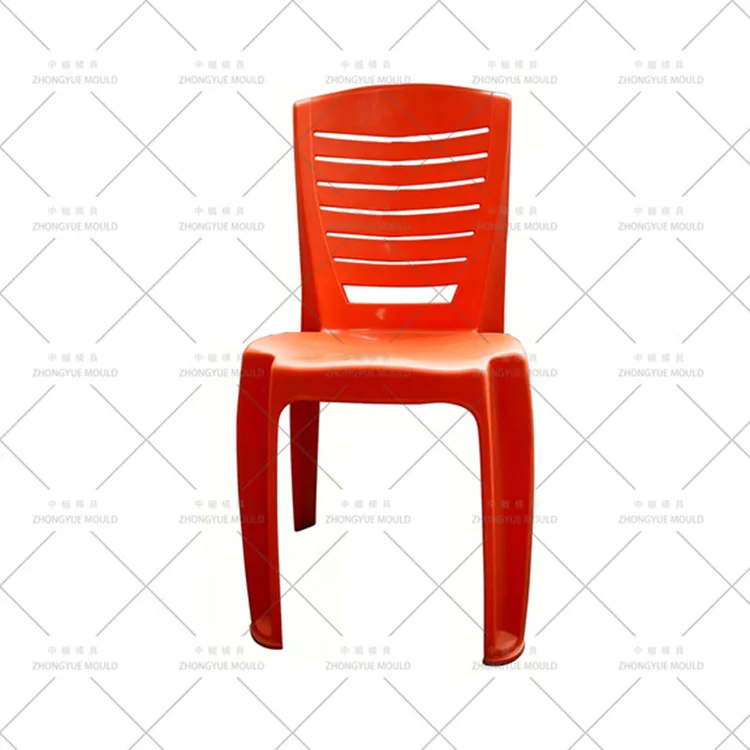
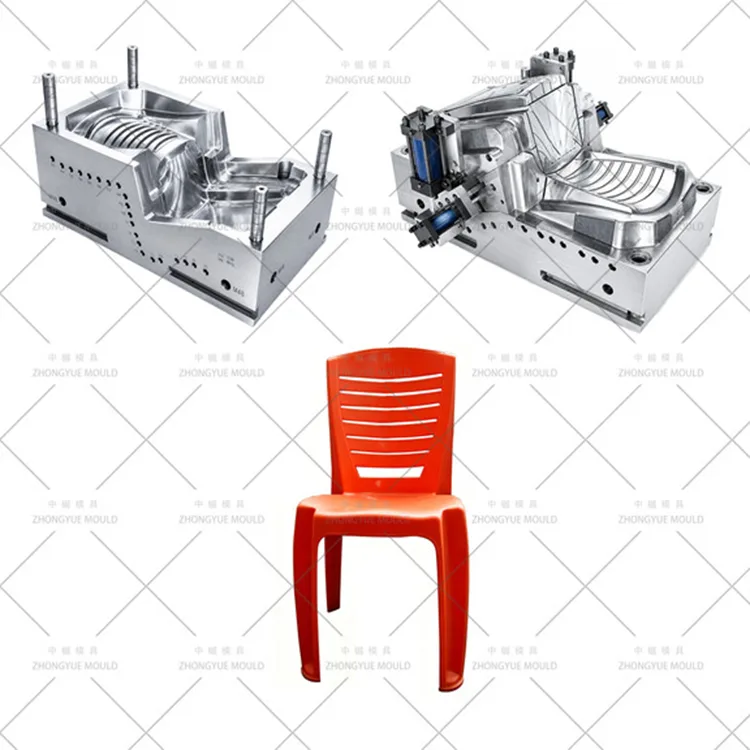
ZHONGYUE MOULD is a professional Chinese injection mold manufacturer supplying Plastic Stackable Armless Chair Moulds / Monoblock Plastic Chair Molds (Commercial Grade Stacking Chairs, Institutional Seating, Event & Banquet Chairs) to global furniture wholesalers, school procurement departments, and hospitality suppliers. Unlike decorative home chairs, these Armless Stackable Chairs are built for durability, high-frequency use, and efficient storage. They are typically molded in one piece (monoblock) from Virgin PP (Copolymer, MFR 8–12) or HDPE for excellent impact resistance and flexibility.
The primary challenge in molding these chairs is preventing sink marks on the seat surface caused by thick internal reinforcing ribs, while ensuring the chair remains dimensionally stable for safe stacking (10–15 chairs high). Our molds feature optimized rib thickness transitions, massive cooling circuits (BeCu inserts), and high-efficiency ejection systems to achieve cycle times of 45–70 seconds. We produce molds for cafe chairs, school desks, training room seating, and event chairs.
From standard 400mm seat height monoblock chairs to ventilated backrest designs, we provide full DFM review focusing on structural integrity and stacking stability before steel cutting.
|
Item |
Specification / Options |
|
|
Mold Name |
Plastic Stackable Armless Chair Mould (Monoblock Commercial Chair) |
|
|
Cavity & Core Steel |
Cavity: 718H (HRC 33–38) or 2738HH (stability). Core: 718H. Leg cores: SKD61 (HRC 48–52). |
|
|
Mold Type |
Two-plate mold; Heavy-duty construction |
|
|
Mold Base |
LKM / DME Heavy-Duty (Weight 3.0T – 6.0T depending on chair size) |
|
|
Cavities |
1×1 standard (Due to large shot volume and complexity) |
|
|
Runner System |
Cold runner (large Y-branch) std.; Hot runner (YUDO/SYNVENTIVE 2–3 tips) optional for faster cycles |
|
|
Gate Type |
Fan gate or Edge gate at seat edge/base |
|
|
Ejection |
Ejector sleeves (for legs) + Long ejector pins (on ribs) |
|
|
Cooling |
BeCu inserts at rib intersections + Baffles in seat core + Peripheral channels; Isolated circuits |
|
|
Venting |
0.02–0.025mm parting-line vents + Vent pins at backrest top & leg tips |
|
|
Surface Finish |
SPI B1/B2 satin finish (Standard commercial); SPI A2 polish optional for premium lines |
|
|
Mold Life Expectancy |
≥500,000 shots (718H); ≥1,000,000 shots (full hardened setup) |
|
|
Recommended Material |
Virgin PP Copolymer (MFR 8–12, impact modified), HDPE |
|
|
Design Software |
UG NX, SolidWorks, AutoCAD, Moldflow (Fill + Cool + Warpage + Stress) |
|
|
Tolerance Control |
±0.2 mm general; Seat flatness ±0.3mm; Stacking height consistency ±0.5mm |
|
|
Mould material |
Hardness |
Mould life |
|
P20 |
HRC 28-33 |
>300,000 shots |
|
718 |
HRC 33-36 |
>500,000 shots |
|
H13 |
HRC >43 |
>800,000 shots |
|
2344 |
HRC >48 |
>800,000 shots |
|
S136 |
HRC 48-52 |
>1,000,000 shots |
Make your nextPlastic Chair Mould project brighten!
A Stackable Armless Chair Mould is a heavy-duty tool designed to produce functional, one-piece plastic seating:
Monoblock Structure — The seat, back, and legs are molded as a single integral part. No assembly required.
Internal Reinforcing Ribs — The underside of the seat contains a dense network of ribs to support human weight. This is the source of molding challenges.
Stacking Features — The legs and seat pan are shaped to interlock securely when stacked vertically without jamming or scratching.
High Impact Resistance — Designed to flex slightly under load rather than crack, especially in cold environments.
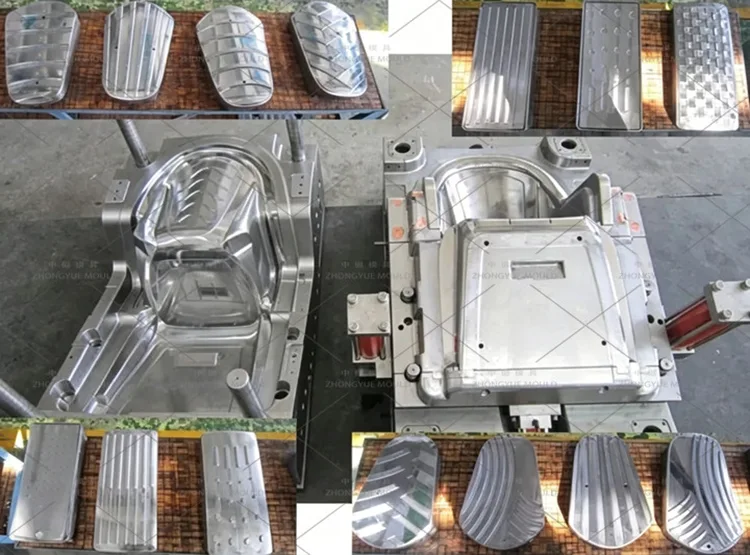
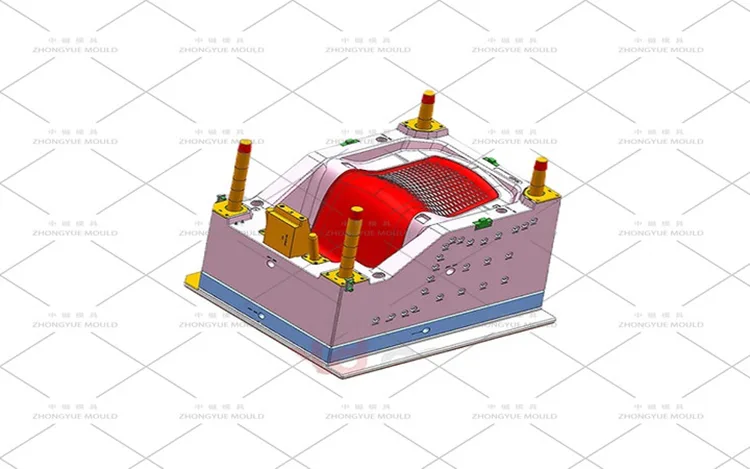
Thick internal ribs cause sink marks on the visible seat surface. We design ribs to be 60–70% of the wall thickness and use Moldflow analysis to place BeCu (Beryllium Copper) cooling inserts directly behind critical rib intersections. This extracts heat faster than the surrounding thin walls, preventing surface depressions.
The seat pan is a large, flat surface prone to cupping or twisting. We optimize packing pressure profiles and cooling time to ensure the seat remains flat. Sometimes a very slight crown (0.1–0.2mm convex) is designed into the mold to compensate for natural material shrinkage.
Monoblock chairs have deep undercuts where the legs meet the seat. We use ejector sleeves (for leg cores) and long ejector pins strategically placed on internal ribs. For fast cycles, we design early ejection systems synchronized with the machine's opening stroke.
Gate location affects internal stress. We typically use fan gates or multiple gates at the seat edge to ensure balanced filling and minimize weld lines in high-stress areas (like the front edge of the seat or the base of the backrest).
We simulate 10-high stacking in 3D to verify that the legs of the upper chair engage the seat of the lower chair correctly, without binding or creating stress points that could cause cracking during stacking/unstacking.
Filling a large chair (shot weight 2.5–4.5kg) requires long flow paths. We incorporate 0.02–0.025mm parting-line vents and vent pins at the far ends of the flow path (top of backrest, tip of legs) to prevent burn marks.
Structural & Warpage DFM — Analyze rib layout (60–70% wall thickness). Run Moldflow to predict sink marks and warpage. Design BeCu cooling strategy. Simulate 10-high stacking. Free DFM report.
Heavy Steel Machining — Rough machining of large cavity and core. Gun-drilling of deep cooling channels.
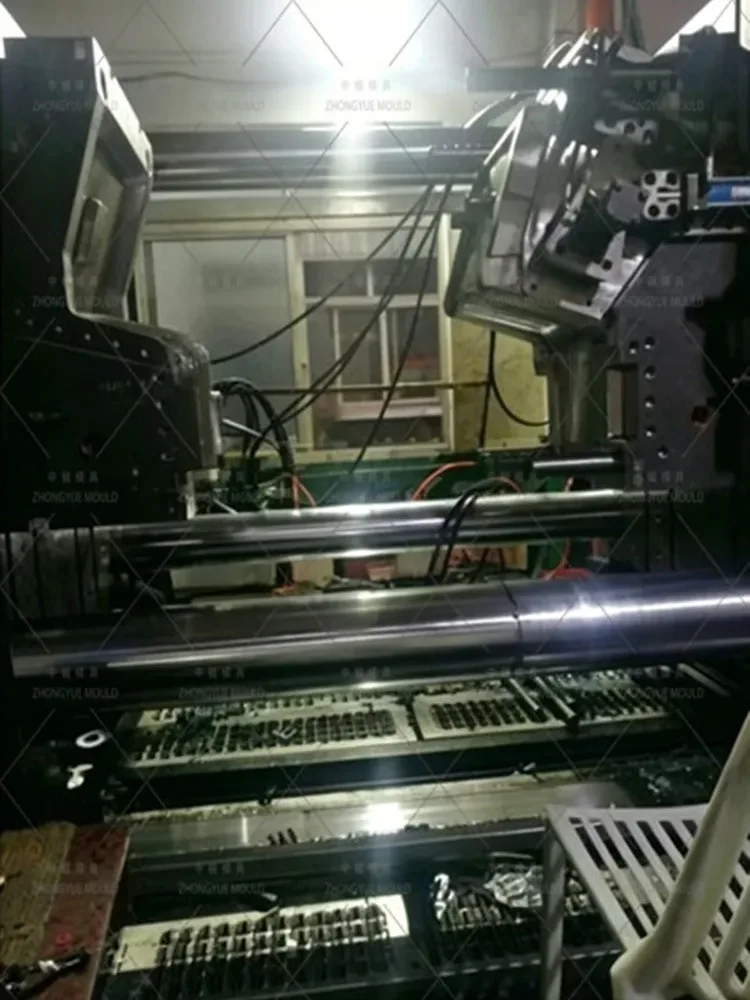
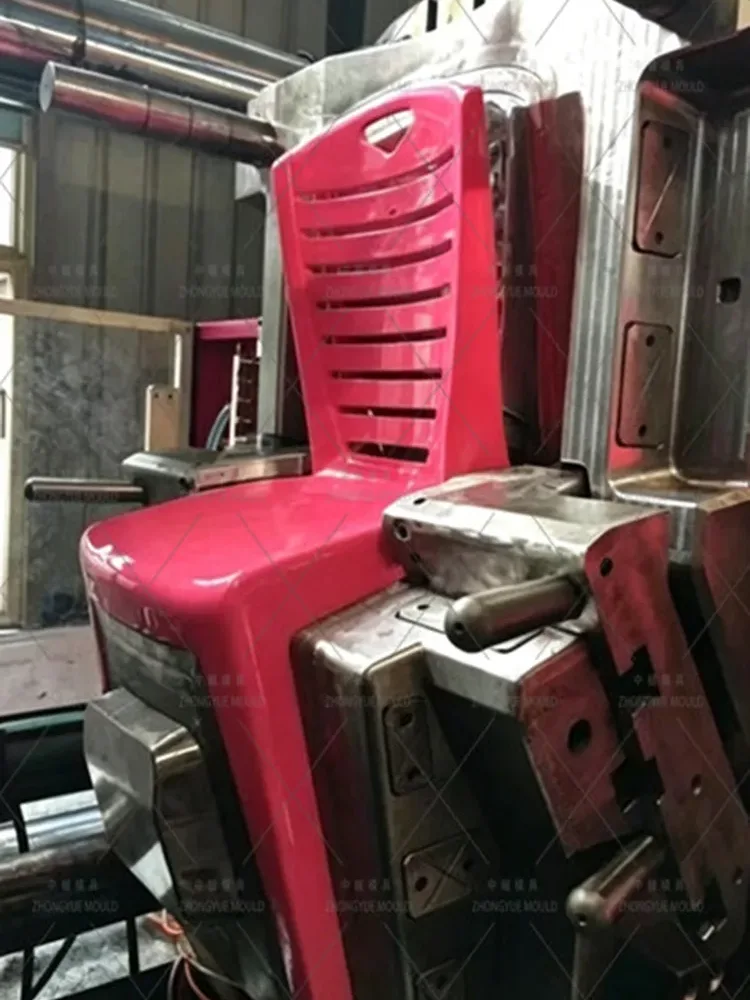
Assembly & T1 Trial — Assemble ejector sleeves and pins. Run T1 trial with specified PP. Perform static load test (150kg) and drop test on sample chairs. Check for sink marks and warpage. Supply trial video + samples.
Optimization & Approval — Adjust cooling or packing if sink/warpage occurs. Prepare mold for shipment.
After-Sales Support — 1-Year warranty, remote technical guidance, and spare parts (ejector sleeves, pins, leg cores).
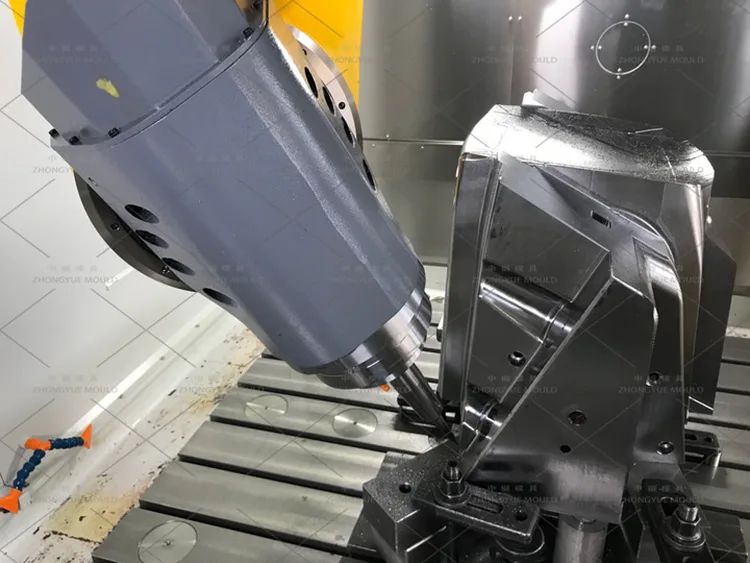
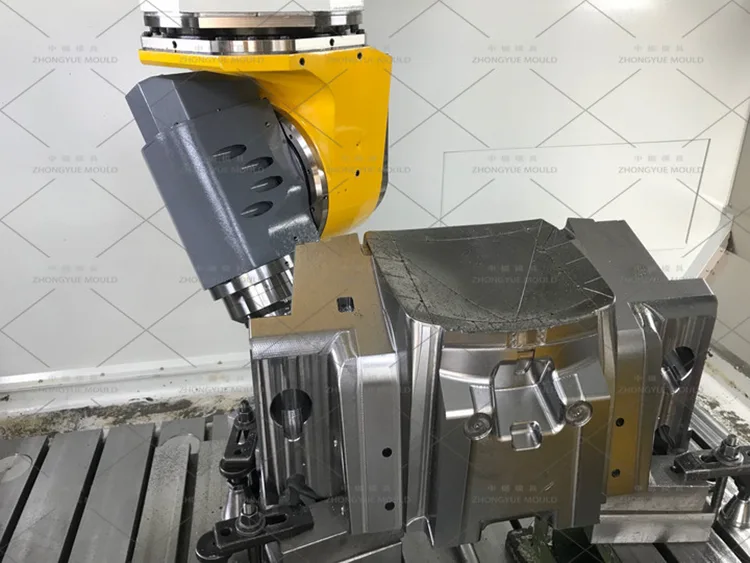
Structural Mold Experts — We specialize in solving sink marks and warpage in large, ribbed structural parts.
Advanced Cooling Design — BeCu inserts at rib intersections ensure fast cycles and cosmetic surfaces.
Stacking Stability — We verify 10-high stacking virtually to prevent field failures.
Built for High Volume — Our molds are constructed with 718H steel for 500k+ shot life.
Global Experience — Molds supplied to furniture factories in Europe, South America, Africa, and Southeast Asia.
Q: How do you prevent sink marks on the seat surface?
A: We design ribs to be 60–70% of the wall thickness and use BeCu cooling inserts directly behind thick rib intersections to cool them faster than the surrounding skin.
Q: Can you make multi-cavity molds for chairs?
A: Due to the large shot volume (2.5–4.5kg) and complex cooling requirements, chair molds are almost always 1×1. Multi-cavity would require a massive machine (2000T+).
Q: What material is best for monoblock chairs?
A: Virgin PP Copolymer (MFR 8–12) is the industry standard. It offers the best balance of impact resistance, flexibility, and cost. HDPE is also used but can be stiffer.
Q: How long is the cycle time?
A: Typically 45–70 seconds, depending on wall thickness and cooling efficiency. Hot runners can reduce this by 5–10 seconds.
Q: What do you need for a quotation?
A: 2D drawing (PDF/DWG) + 3D model (STP/IGS) of the chair, specifying material, color, and required load capacity (static/dynamic).
Send your chair drawings or specifications to ZHONGYUE MOULD. We will provide a comprehensive DFM analysis (covering sink prevention, warpage, and stacking) + formal quotation within 24–48 working hours.
Contact us today to build a high-efficiency, durable Monoblock Chair Injection Mold!
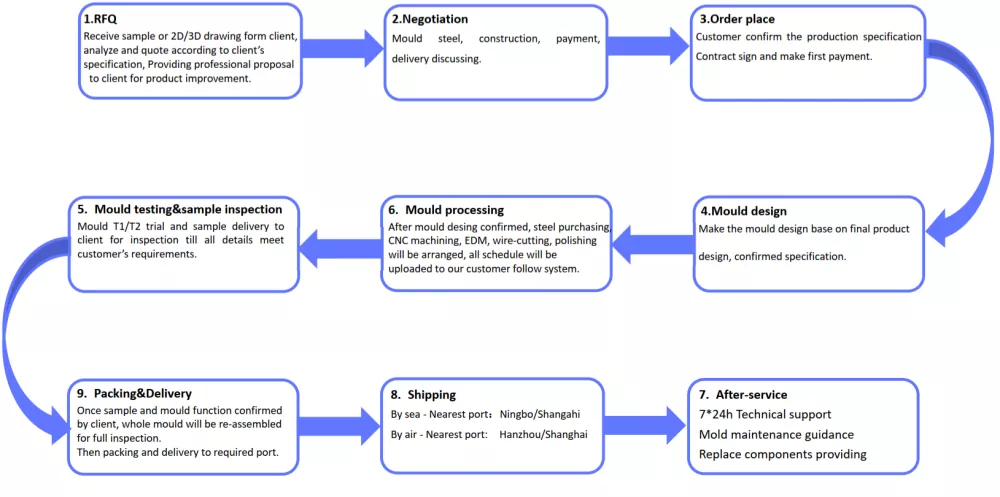
Driven by the philosophy:
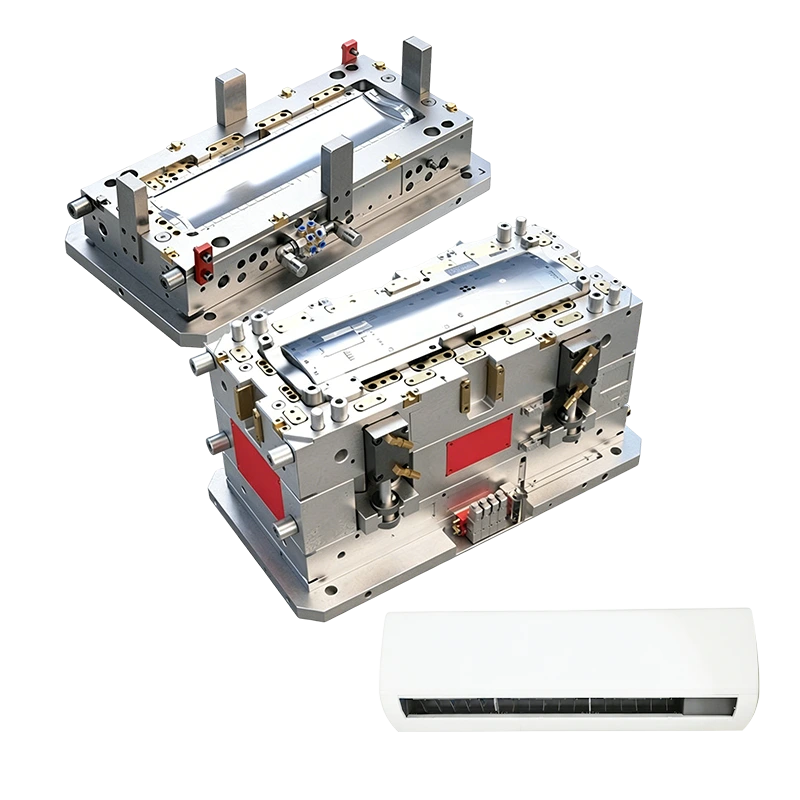
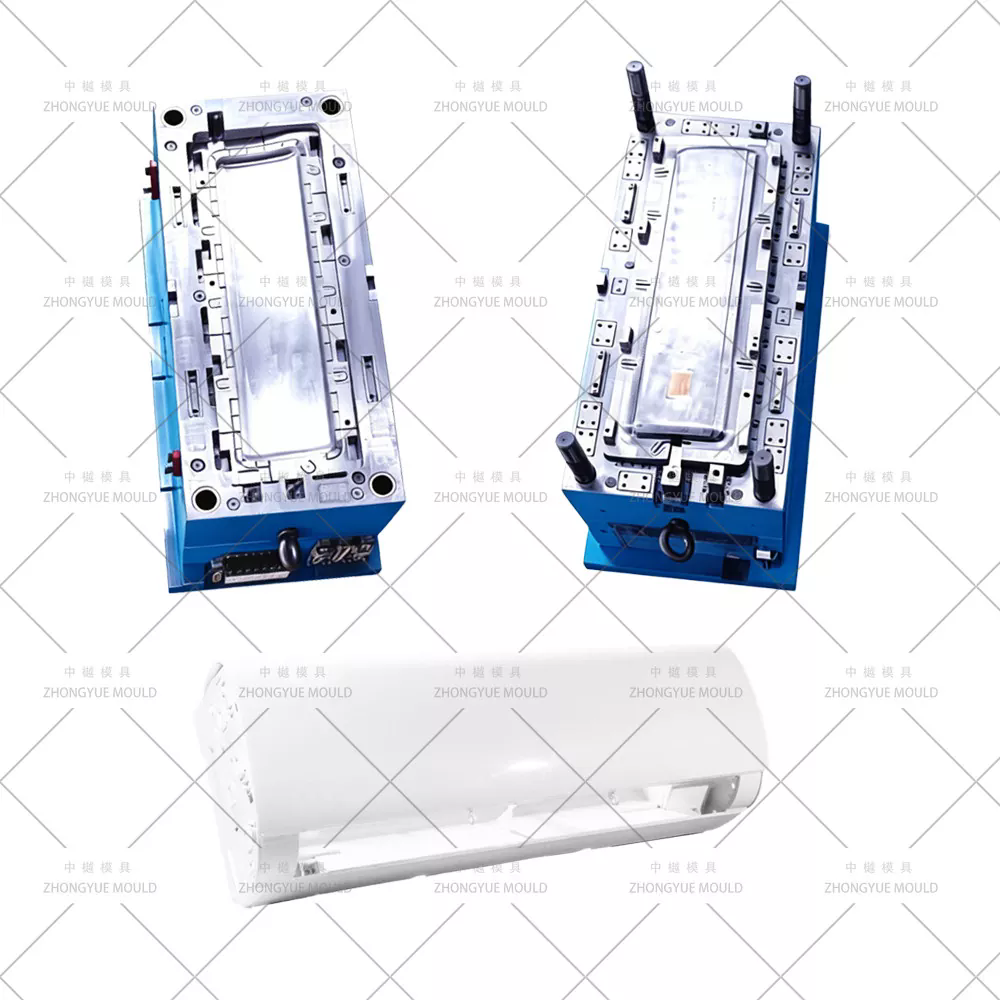
Zhongyue Mould is a leading company in the plastic injection air conditioner Cover mould industry. Our highly experienced team of engineers and designers have many decades of combined experience in plastic air conditioner Cover mould design and manufacturing. We provide a comprehensive service, specializing in the production of high-quality and high-precision air conditioner Cover moulds. We have also assisted numerous customers in customizing various types of plastic air conditioner Cover moulding lines.
We can also offer comprehensive assistance in the management of your production process. The procurement department will purchase high-quality raw materials, while the technical department will select the appropriate plastic formula. In accordance with the parameters of the plastic air conditioner Cover mould life requirements and market positioning, we will select the most suitable plastic air conditioner Cover parameters, structure, etc. Our extensive production capacity allows us to deliver plastic air conditioner Covers promptly, at competitive prices and with guaranteed quality.
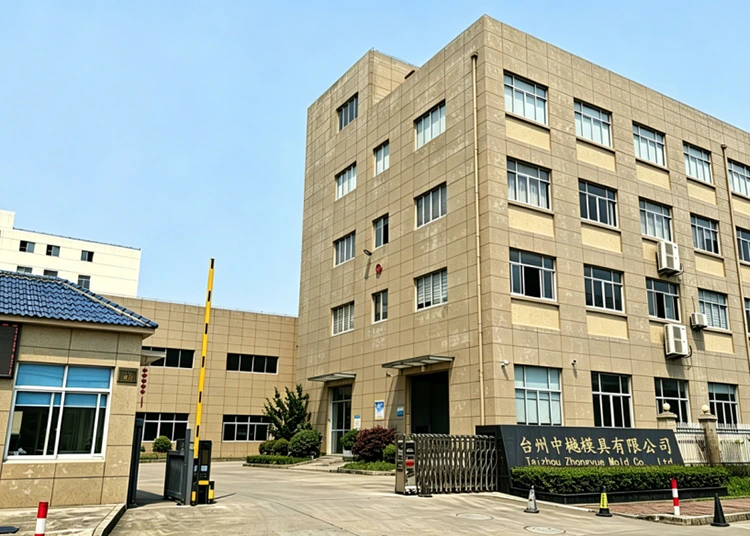
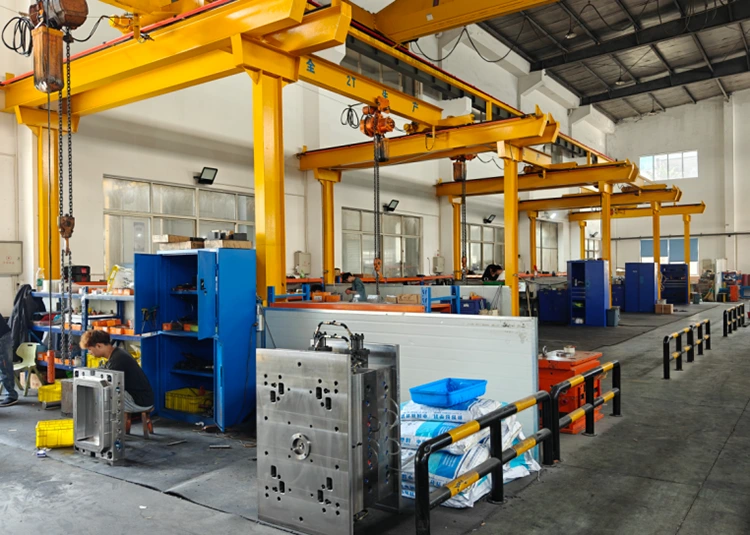
Address
No.38, Kaituo Road Xinqian Street, Huangyan Taizhou City, Zhejiang Province, China
Tel