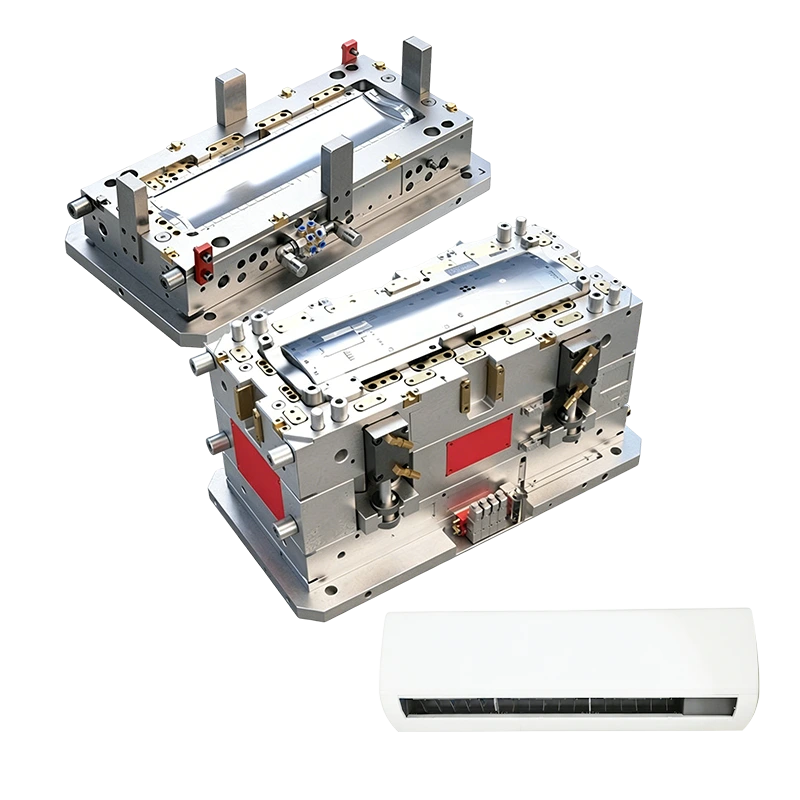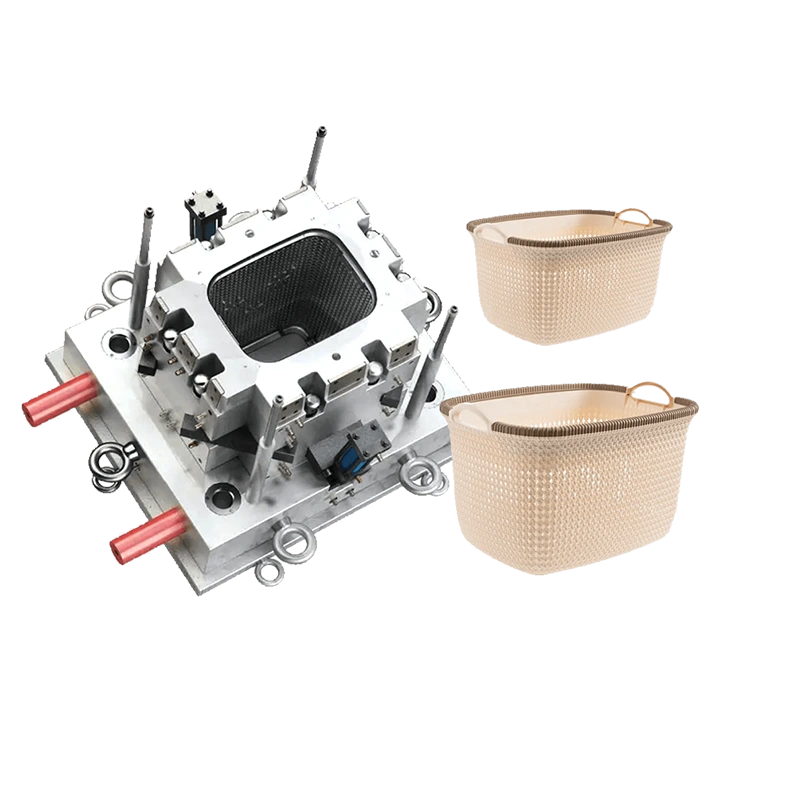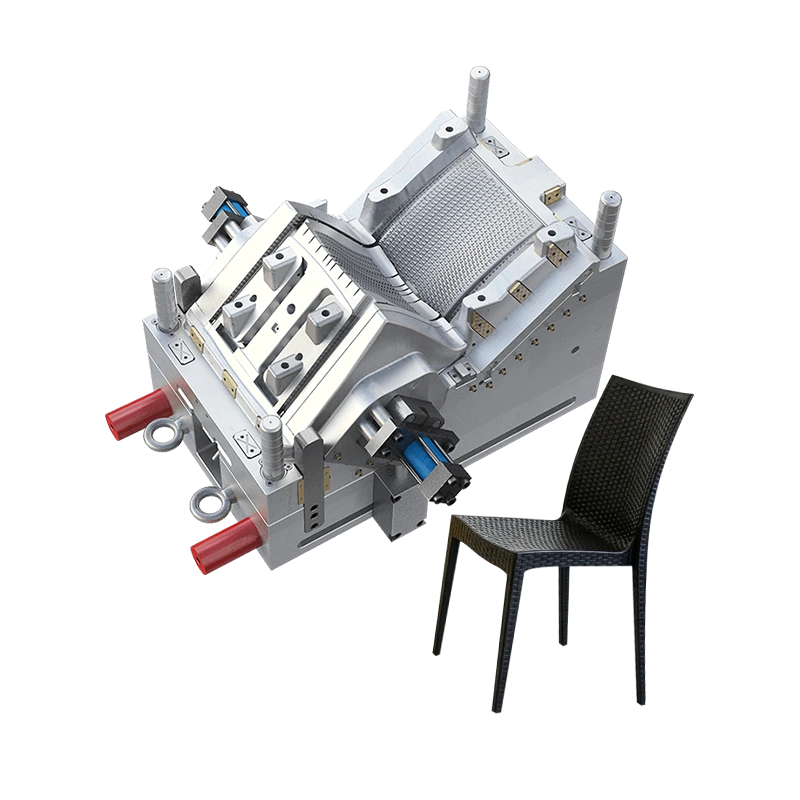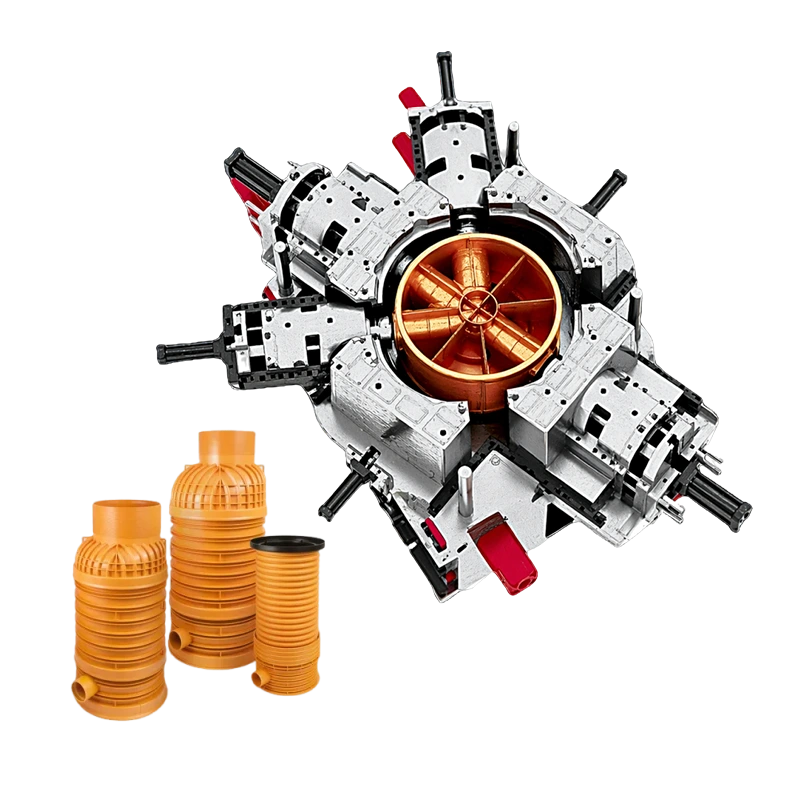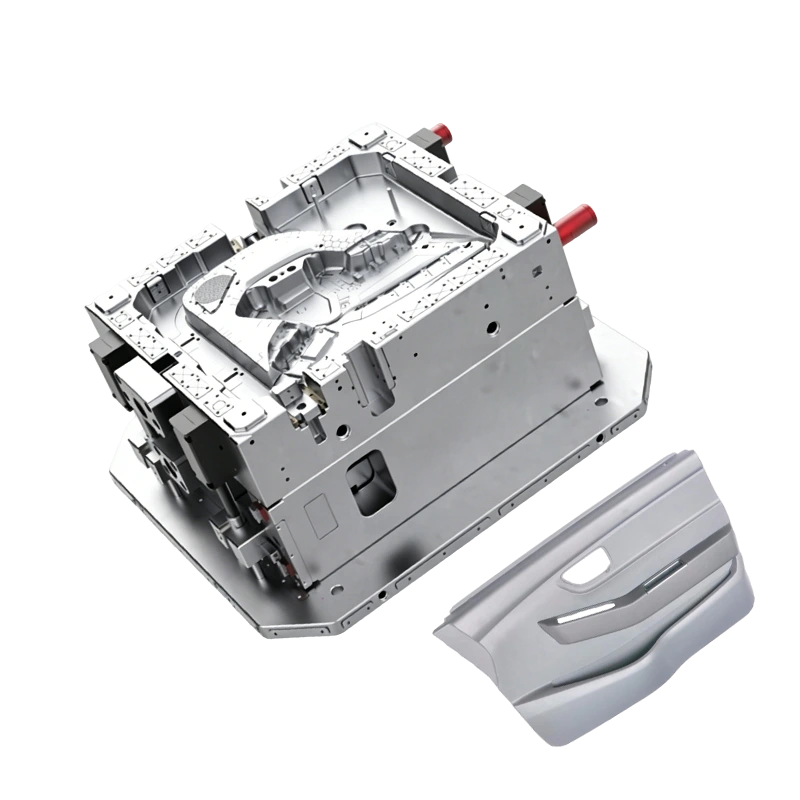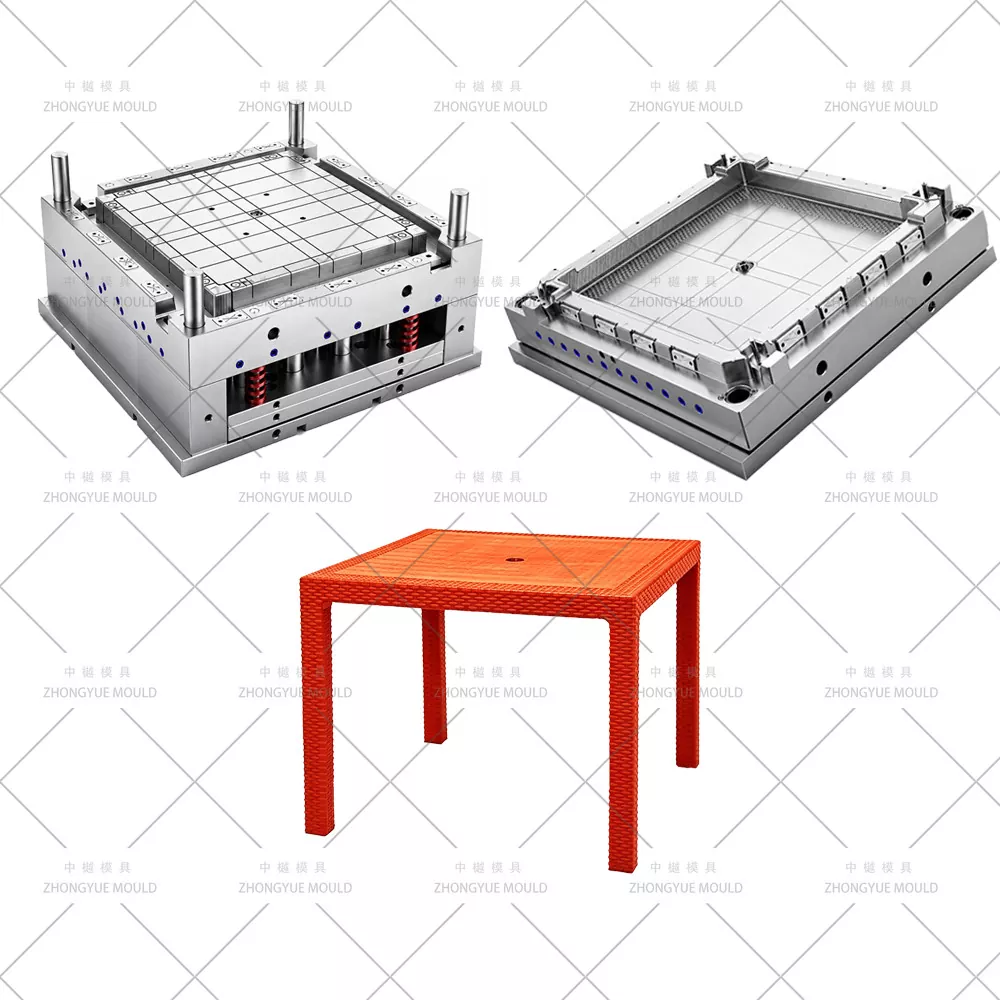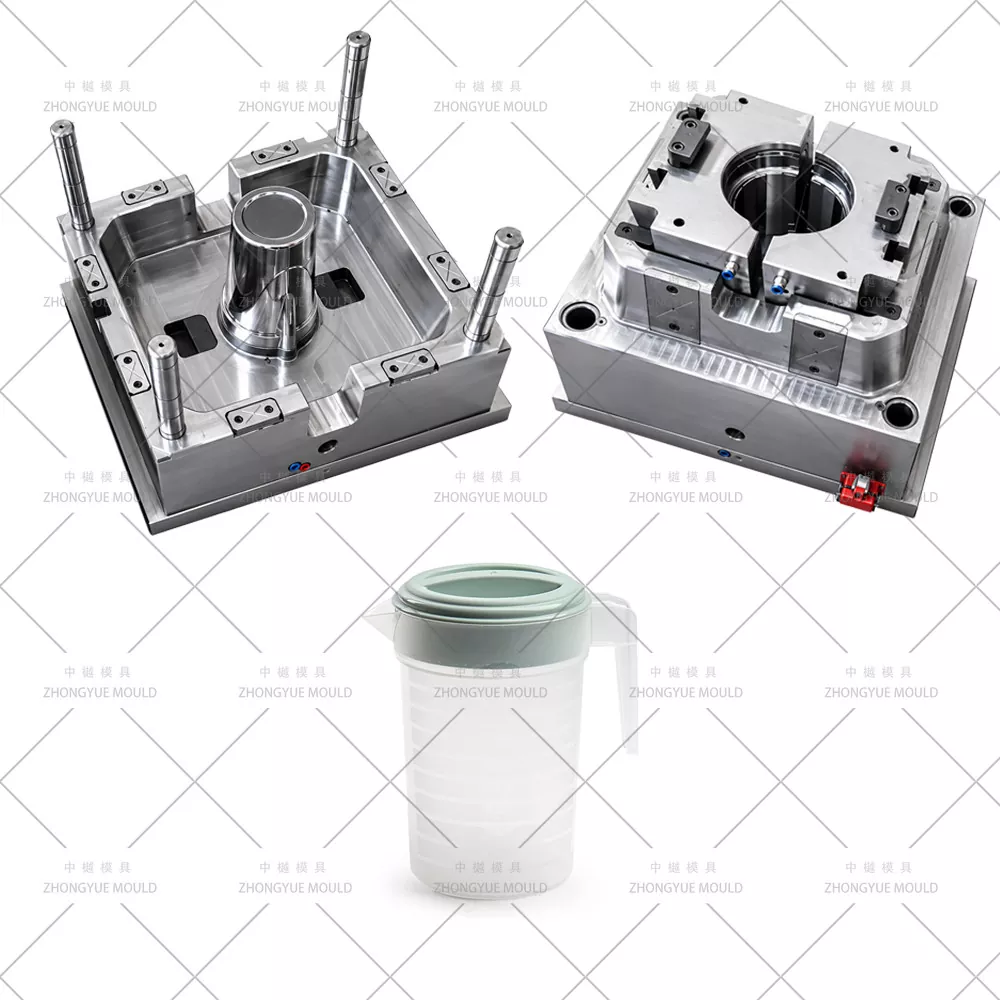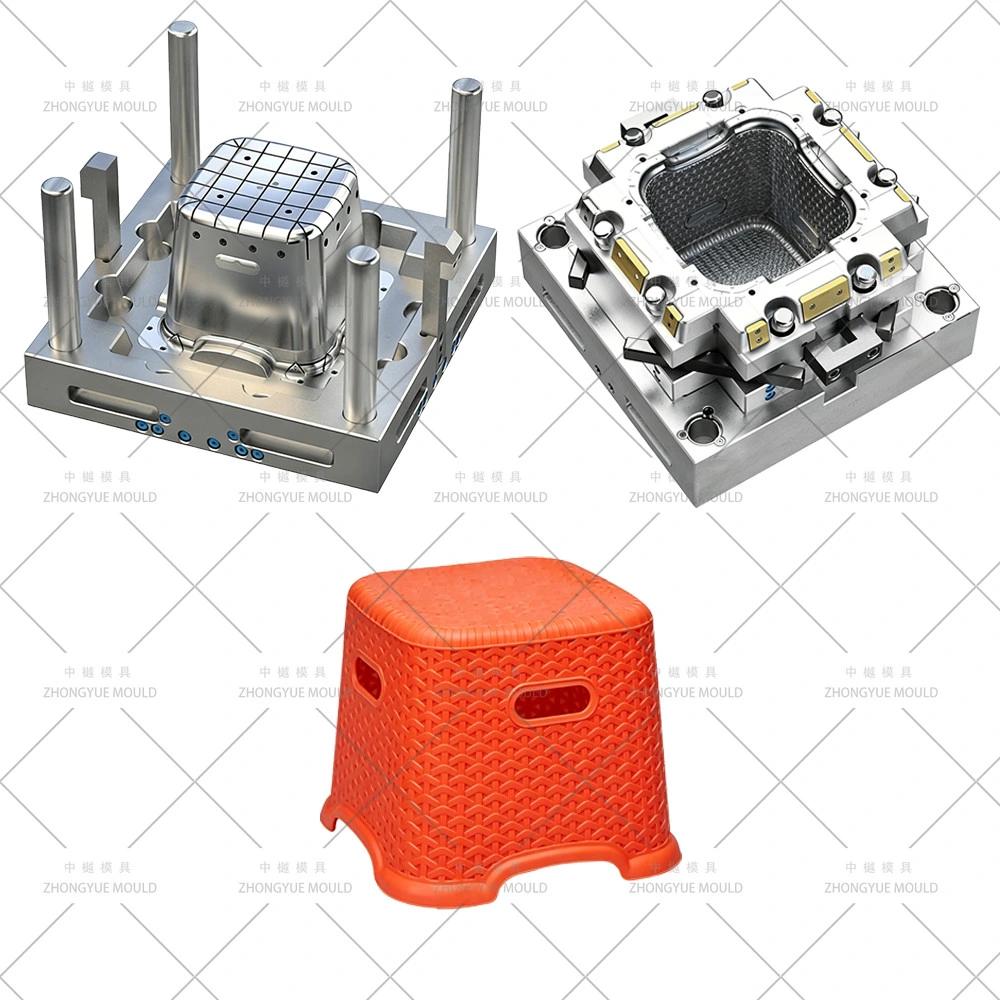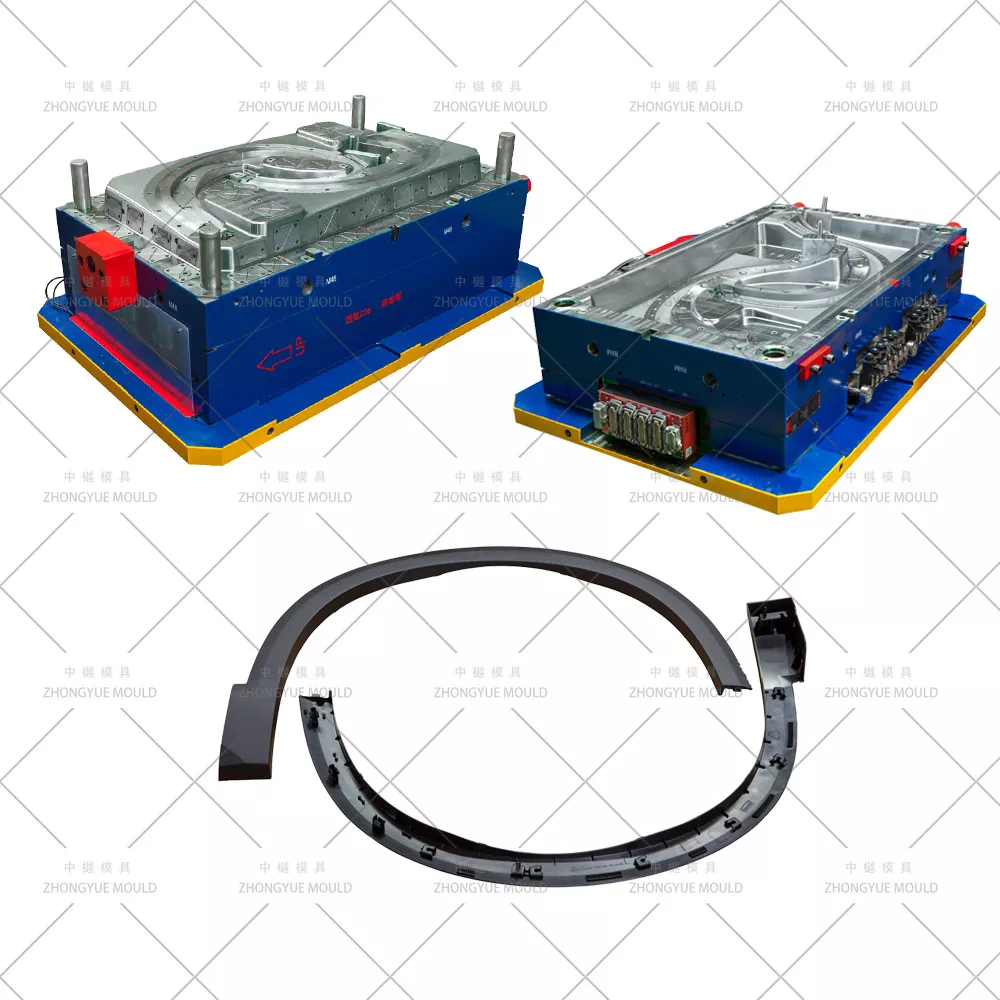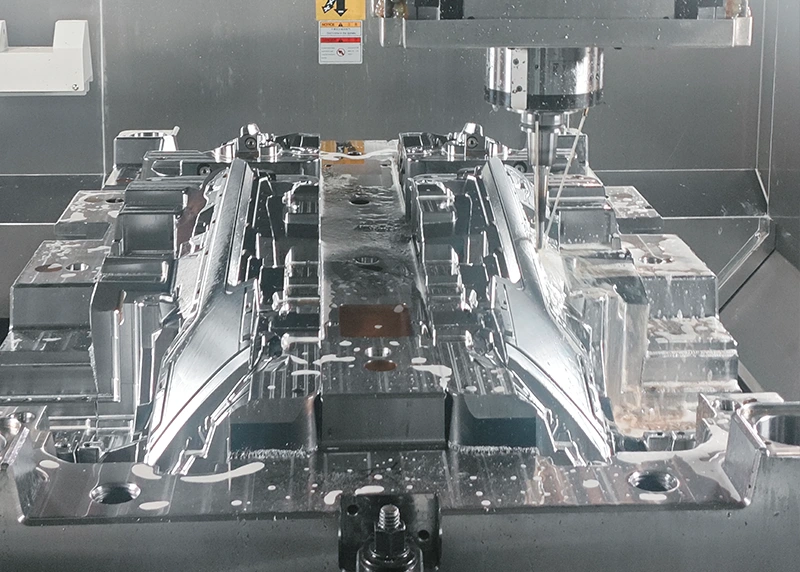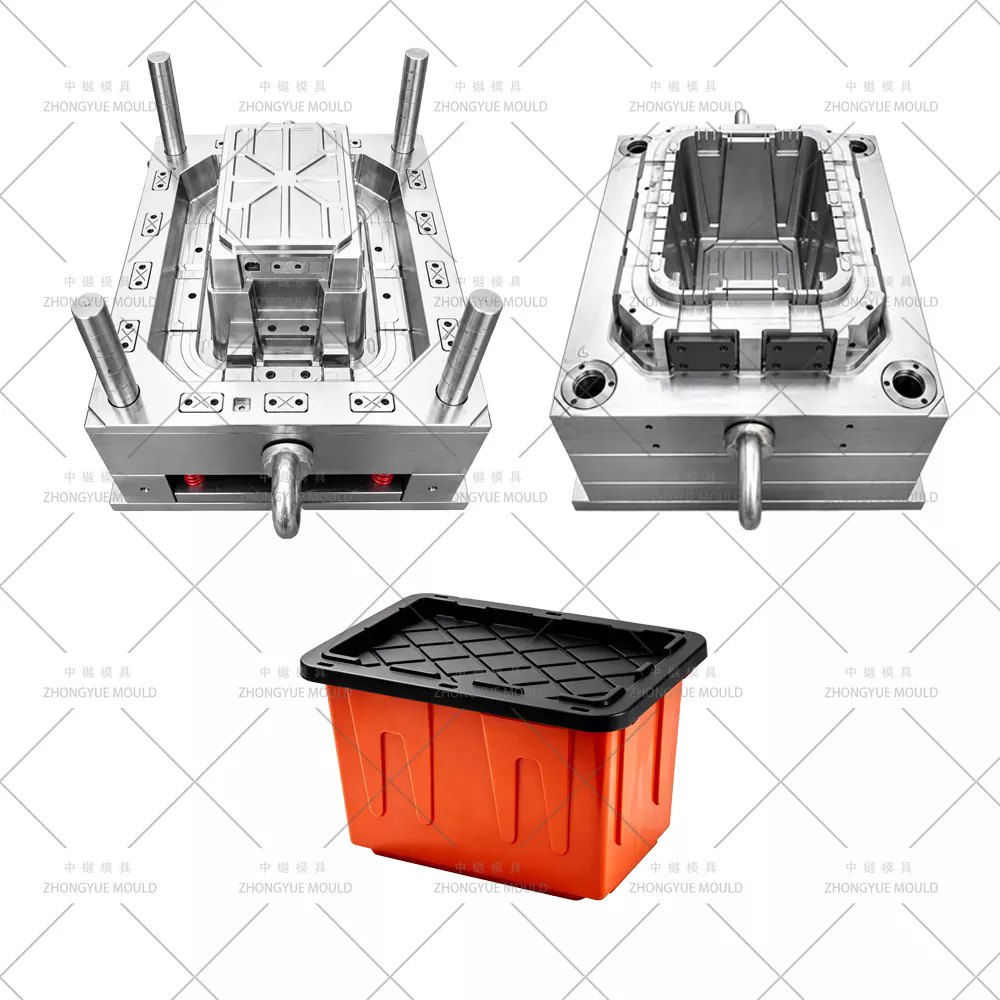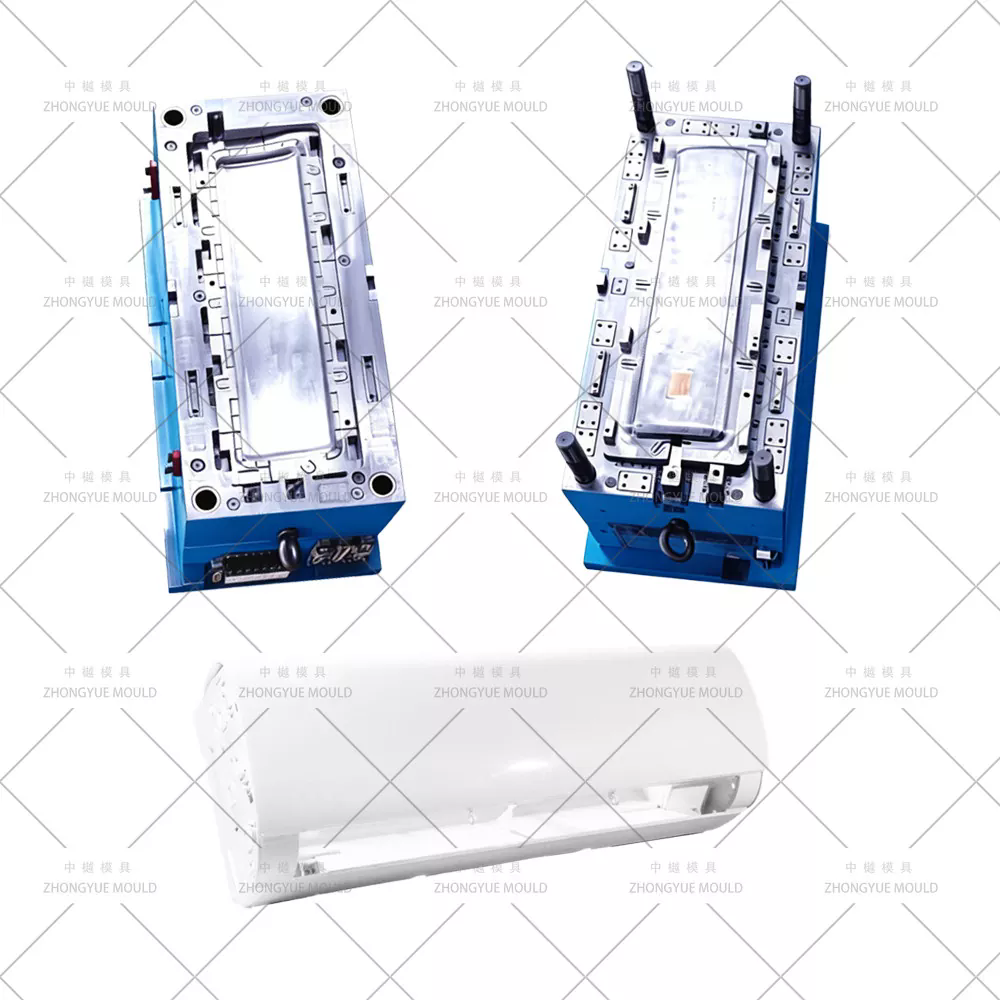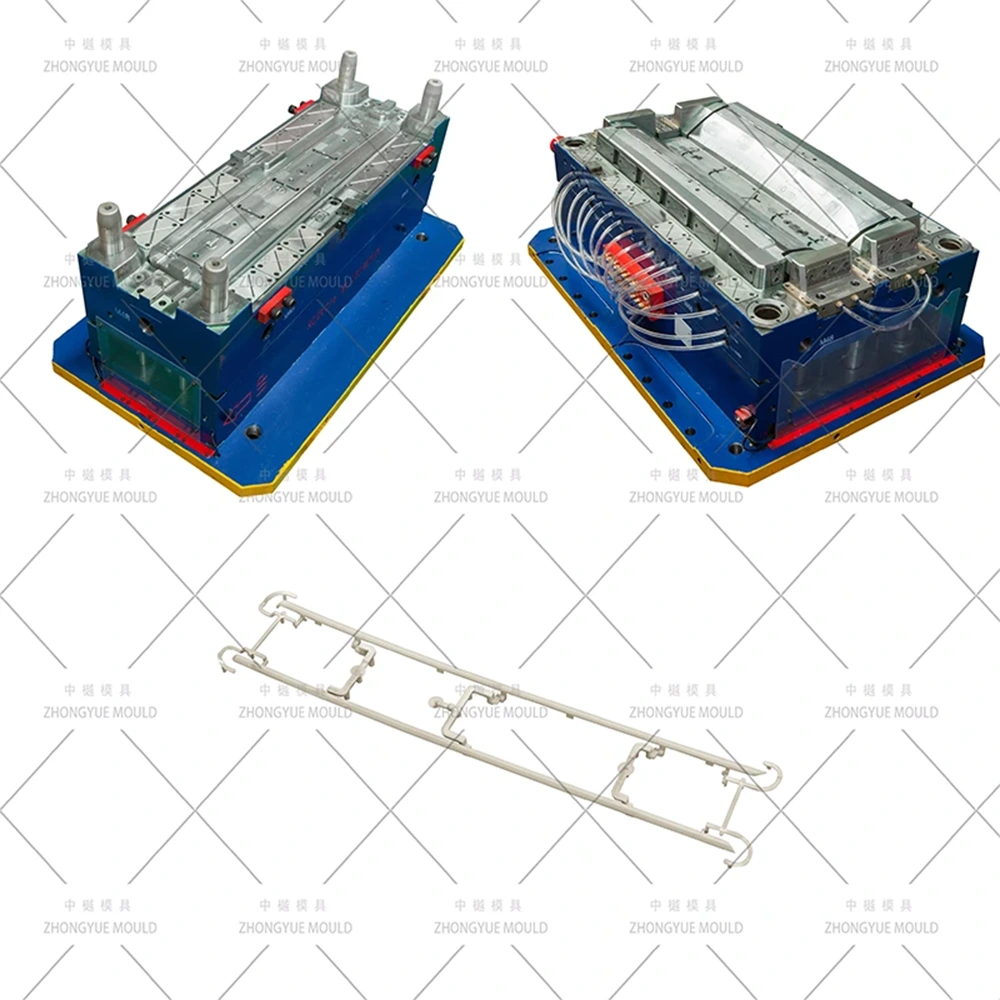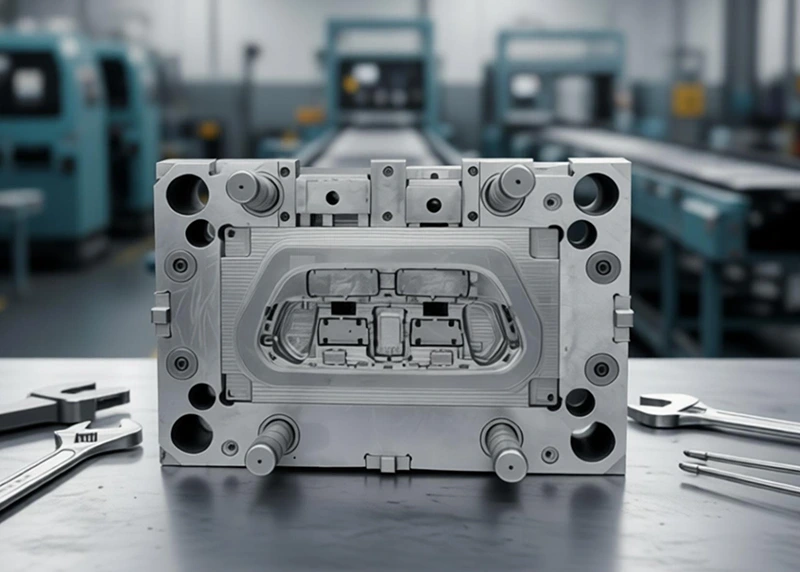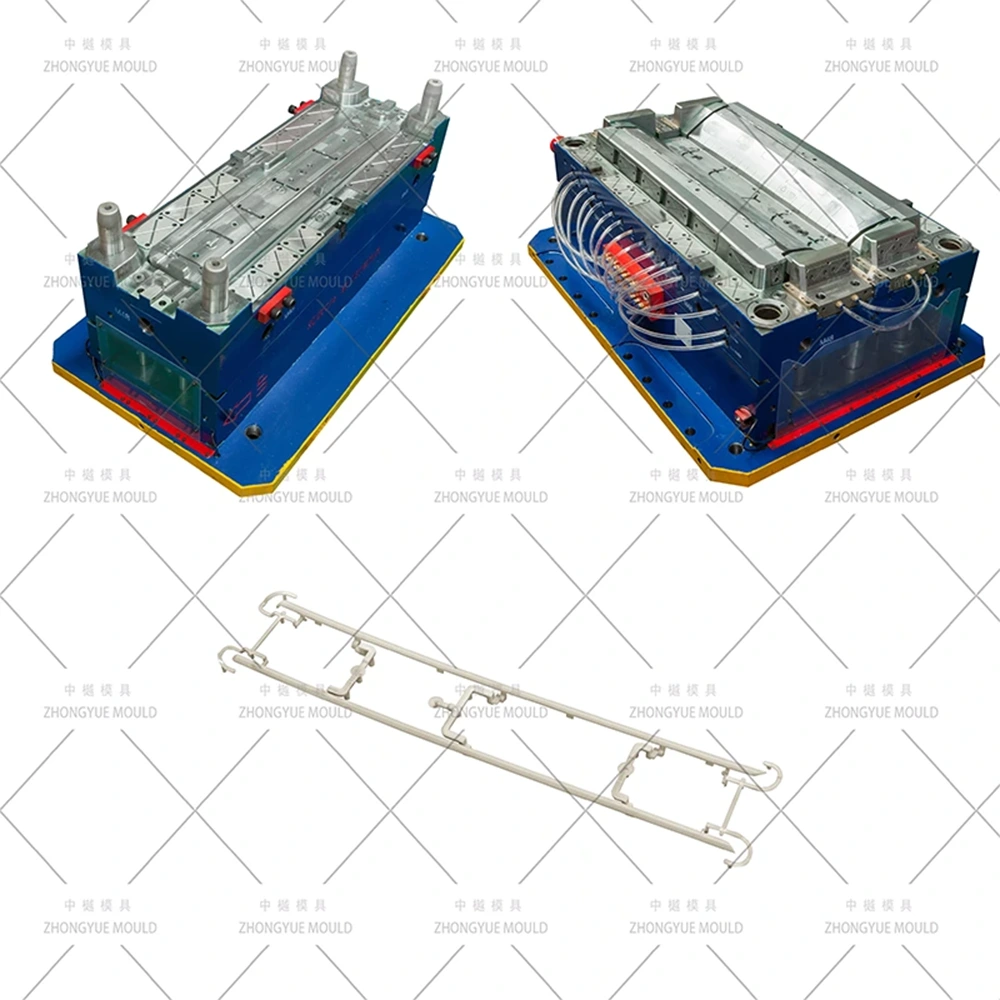
Automotive interior and exterior trims—such as A/B/C pillar garnishes, window surround moldings, door belt trims, and scuff plates—not only determine the vehicle's visual quality but also directly affect body sealing and assembly precision. Because these parts are typically long, thin-walled, and feature complex snap-fit clip bosses or mounting tabs on the backside, conventional injection molding is highly prone to warping, bowing, and visible sink marks. Therefore, utilizing a high-precision Automotive Trims Mould is the fundamental baseline for ensuring dimensional stability and reducing production cycle times.
Below are the core technical specifications of the automotive trim molds manufactured by Taizhou Zhongyue Mould Co., Ltd., organized for quick procurement reference:
| Parameter / Item | Specifications & Options |
| Mold Name | Automotive Trim Strip / Garnish Injection Mold (Automotive Trims Mould) |
| Cavity Steel | 718H (HRC 33–38) or 2738HH for texturing; S136 (HRC 48–52) for mirror chrome |
| Core Steel | 718H, P20, or H13 (Nitrided) |
| Slides & Lifters | H13 nitrided or SKD61 tool steel |
| Mold Base Standard | LKM, DME, HASCO, or self-designed standard (Weight: 0.8T – 3.5T) |
| Cavity Configuration | 1×1 (Single cavity), 1+1 (Symmetrical Left/Right pair), 2+2, or 4 cavities |
| Runner System | Balanced Cold Runner (Y-branch) or Hot Runner (YUDO/Synventive open drop) |
| Gating Type | Hidden Submarine (Latent) gate, Fan gate, or Hot Drop direct gate on back face |
| Ejection System | Ejector pins + small angled lifters + mini hydraulic slider mechanisms |
| Surface Finish | Cavity VDI 27–36 matte leather grain / MT texture; S136 SPI A1/A2 mirror polish |
| Molding Polymers | PP-T20 (Talc filled), ABS, PC+ABS, TPO (exterior black), Plating-grade ABS |
| Design Software | UG NX, CATIA, SolidWorks, Autodesk Moldflow Insight |
| Tolerance Profile | General: ±0.05 mm; Clip Pitch: ±0.1 mm; Bowing: ≤0.3–0.5 mm per 500mm length |
| Production Lead Time | 30–50 Days (From 3D mold design approval to T1 trial samples) |
To address the natural geometric vulnerabilities of long, thin automotive trim parts, specific structural design measures must be implemented:
• Symmetrical Multi-Cavity Layouts: Most automotive trims are symmetrical left and right parts (e.g., driver and passenger side A-pillars). Utilizing a 1+1 cavity layout combined with a balanced cold Y-branch or hot drop runner ensures identical filling times and uniform injection pressures across both cavities.
• Hidden Submarine Gating: To guarantee a flawless visible appearance (A-surface) free of gate vestiges, the mold uses submarine or latent gates. These are engineered on the inner flange or back structural ribs and are designed to self-shear automatically upon mold separation.
• Advanced Lifter and Slide Mechanisms: Trim parts contain dozens of structural snap-fit clip bosses on the back face. The mold incorporates mini angled lifters and hydraulic slides crafted from nitrided H13 steel to clear these complex undercuts smoothly without causing drag marks or part deformation.
• Precise Shrinkage Compensation: Materials like Polypropylene with 20% talc (PP-T20) display directional shrinkage variations (~0.8–1.3% in the flow direction and ~1.0–1.5% in the transverse direction). The mold cavity dimensions are scaled non-uniformly during design to prevent long-term longitudinal bowing.
• Zoned Cooling Circuits: Unbalanced cooling causes severe warping in slender parts. The mold incorporates deep independent cooling channels (∅6–10mm) along the length of the cavity, supplemented by Beryllium Copper (BeCu) inserts near thick mounting bosses to accelerate heat dissipation.
Automotive trims require specialized plastic resins and matched mold steel surface treatments depending on their location and aesthetic function:
• Interior Matte Textured Components: Parts like A/B/C pillar garnishes and door sill kick plates require low gloss and scratch resistance. These are typically molded from PP-T20 or ABS. Pre-hardened 718H or 2738HH steel is chosen for the mold cavity to respond optimally to chemical acid etching or laser texturing, achieving a VDI 27–36 leather grain. Draft angles must be opened generously (minimum 1.5° per VDI grade) to avoid scuffing during ejection.
• Exterior High-Gloss and Chrome Pieces: Parts like window surrounds or radiator grille accents utilize TPO, PC+ABS, or plating-grade ABS. These require through-hardened S136 stainless steel cavities polished manually to an SPI A1/A2 mirror finish. Any microscopic void in the steel is magnified after electroplating, making premium steel purity and specialized cleanroom polishing mandatory.
Before any tool steel block is cut, digital validation reviews are performed to minimize design errors and late-stage engineering changes:
DFM (Design for Manufacturability) Review
This stage evaluates wall thickness consistency (optimally within 2.0–3.0mm for auto trims), draft accessibility, parting line placement, and lifter stroke clearances to intercept potential sink marks or short shots early.
Moldflow Simulation Analysis
1. Simulates melt front propagation to establish the best gate locations, pushing air traps and weld lines to hidden back flanges.
2. Calculates clamping force requirements to eliminate parting line flash on long, high-pressure injections.
3. Conducts volumetric shrinkage and deflection analysis to predict bowing tendencies, allowing designers to apply counter-deformation adjustments directly to the mold geometry.
Our manufacturing scope covers the full technical range of mainstream automotive interior and exterior trim profiles:
| Component Type | Common Substrates | Primary Mold Design Focus |
| A / B / C Pillar Garnish | PP-T20, ABS | 1+1 L/R cavity layout; uniform VDI matte leather texture; complex clip boss lifters; hidden sub-gating. |
| Window Surround Trim | Exterior TPO, Chrome ABS | S136 cavity blocks; ultra-precise parting line control to prevent flash; abrasion-resistant steel for TPO formulations. |
| Scuff / Kick Plate | PP+EPDM, ABS | High-wear texture engraving; balanced cooling for thick-to-thin rib transitions; 1+1 or 2-cavity configurations. |
| Grille Bright Accents | Plating-Grade ABS | SPI A1 mirror polish cavity; hesitation-free runner paths; minimal witness lines; single-cavity setups. |
| Roof Rail / Windshield Trim | TPO, PP+EPDM-T20 | Slender thin-strip stabilization; multiple cooling zones to prevent bow; precise alignment for perfect body gap matching. |
Founded in 2015, Taizhou Zhongyue Mould Co., Ltd. is a high-tech Chinese injection mold manufacturer and supplier located in Huangyan, Taizhou, Zhejiang Province—widely recognized as the "Mould Town of China." Our modern production facility covers an area of over 10,000 square meters.
Driven by our core philosophy, “Quality Makes the Future, Focus Creates Professional,” Zhongyue provides comprehensive end-to-end solutions, including plastic mold design and manufacturing, product development support, and mass production injection molding. We maintain a highly stable engineering department where over 70% of our core technicians possess 10+ years of direct industry experience. The company holds ISO 9001 quality management certification and runs high-speed CNC machining centers, precision EDM machinery, and coordinate measuring machines (CMM) to meet the strict export tooling standards of international Tier-1 auto parts suppliers and OEMs.
Zhongyue Mould applies rigorous milestone management to every Automotive Trims Mould project:
1. Project Kick-off & DFM Review (Days 1–3): Technical review of part data, determination of parting lines, gate positioning, and slide layouts, followed by the delivery of a comprehensive DFM report.
2. Moldflow & 3D Structure Design (Days 4–12): Running injection molding simulations to optimize fill patterns. Generating full 3D assembly models (UG NX / CATIA) for final customer sign-off.
3. Precision Tool Machining (Days 13–35): Execution of high-speed CNC roughing and finishing, deep-hole gun drilling for cooling water lines, EDM for fine clip recesses, and final specialized VDI texturing or S136 manual mirror polishing.
4. T1 Mold Trial & Dimensional Validation (Days 36–42): Running the initial mold trial on our in-house injection molding presses. Capturing live sampling videos, generating a complete CMM dimensional report, and dispatching free T1 plastic samples to the client via express courier.
5. Mold Tuning & Export Packaging (Days 43–50): Implementing minor adjustments based on sample verification. Applying anti-rust coatings, packing the mold in a fumigation-free wooden export crate, and shipping it alongside engineering schematics and a 5% custom spare parts package.
Q1: Can your factory build both Left (L) and Right (R) symmetrical trim parts in a single mold?
A: Yes. Most symmetrical pillar garnishes, scuff plates, and window waist-line trims are designed in a 1+1 cavity configuration (or 2+2 for small strips). This ensures identical cycle times, material properties, and color consistency between both parts while doubling the production output per shot.
Q2: How do you prevent long, slender plastic trim strips from warping or bowing after ejection?
A: We counteract bowing by performing comprehensive Moldflow warp analyses during the design stage. We apply non-uniform shrinkage scaling based on the specific resin grade (e.g., PP-T20) and integrate multiple independent, zoned cooling circuits (baffles and bubblers) to equalize thermal contraction across the core and cavity.
Q3: Which tool steel do you recommend for high-gloss, chrome-plated exterior trim pieces?
A: We strictly recommend through-hardened S136 stainless steel (heat-treated to HRC 48–52). S136 provides the material density and corrosion resistance required to achieve a flawless SPI A1/A2 mirror polish, ensuring the molded parts remain free of pitting or surface ripples after electroplating.
Q4: What level of transparency do you offer to buyers during the tool fabrication phase?
A: We maintain clear tracking communication. Project engineers provide detailed weekly progress reports supported by high-resolution photos and videos of the active machining steps. For T1/T2 mold trials, we support live video streaming links so your team can observe the testing and ejection process in real-time.
Q5: What is your standard warranty and component support package for export molds?
A: We provide a comprehensive 1-year warranty alongside certified tool life guarantees (e.g., minimum 500,000 shots for 718H steel). Additionally, we ship every mold with an extra 5% critical spare parts package (including ejector pins, lifter springs, and internal seals) free of charge to prevent production downtime.
• Specialized Automotive Competence: Years of proven experience developing large bumpers, instrument panel assemblies, pillar trims, and high-appearance bright strips.
• Integrated In-House Manufacturing: All phases—from DFM generation and Moldflow simulations to CNC machining, polishing, and trail molding—are executed under one roof to control costs and lead times.
• Certified Supply Chain Integrity: We source traceable, certified tool steels (such as genuine LKM, ASSAB, or Groeditz) and hot runner configurations (YUDO, Synventive) backed by material certifications.
• Export-Compliant Logistics Support: We supply fully compliant fumigation-free wooden crates, English engineering schematics, detailed mold operation manuals, and traceable heat-treatment logs.
An engineered, high-precision Automotive Trims Mould balances immaculate cosmetic aesthetics with long-term mechanical reliability during high-volume production. Taizhou Zhongyue Mould Co., Ltd. combines advanced engineering systems, specialized Huangyan tooling infrastructure, and strict quality verification protocols to protect your assembly lines from common molding defects like flash, warp, and sink marks.
Ready to optimize your next automotive molding program? Please contact us today by submitting your trim component 3D models and target annual volumes. Our engineering desk will deliver a comprehensive DFM review and a formal, competitive commercial quotation within 24 to 48 working hours. Let us elevate your manufacturing precision together.