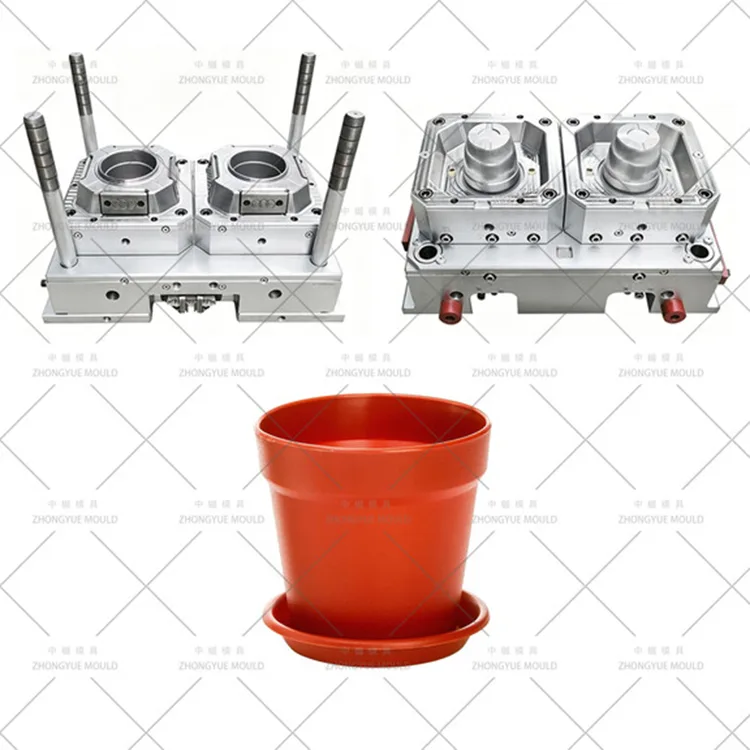
ZHONGYUE provides precision-engineered injection mould solutions for manufacturers seeking a reliable Plastic Round Plant Pot Mould for commercial gardening products. By combining thoughtful mould design, suitable tooling materials, and optimized production processes, manufacturers can produce consistent plant pots that meet market expectations for durability, appearance, and cost efficiency.
A well-designed Plastic Round Plant Pot Mould is essential for producing uniform, durable, and visually appealing plastic plant pots at scale. From cavity configuration and mould steel selection to cooling efficiency, drainage features, and surface finishing, every design decision affects production performance and final product quality. This article explains how to select an appropriate mould, evaluate essential technical factors, reduce manufacturing defects, and improve long-term production efficiency. It also outlines practical considerations for buyers comparing customized injection mould solutions for nurseries, garden centres, landscaping suppliers, and household gardening markets.
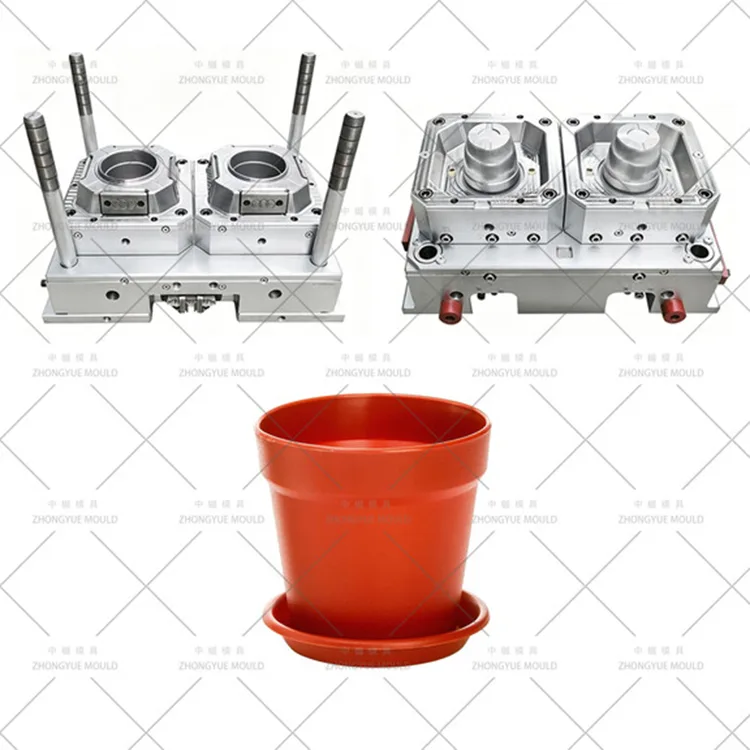
A Plastic Round Plant Pot Mould is a specialized injection moulding tool used to manufacture plastic pots with a circular opening and a defined internal cavity. During production, molten thermoplastic material is injected into the mould under controlled pressure. After cooling and solidification, the mould opens and the finished pot is ejected.
Although the circular shape appears straightforward, producing a high-quality plant pot requires careful engineering. Wall thickness, rim strength, bottom geometry, shrinkage, and cooling conditions all influence the finished product. Poorly designed tooling can lead to warping, uneven walls, visible sink marks, or difficult part ejection.
Manufacturers may use these moulds to produce pots in various diameters, heights, capacities, and surface finishes. Depending on the target market, designs can range from simple nursery containers to decorative household planters with textured exteriors.
For businesses planning a new product line, ZHONGYUE's Plastic Round Plant Pot Mould provides a relevant starting point for evaluating dedicated tooling solutions.
The quality of the mould directly affects the consistency and economics of the injection moulding process. A carefully engineered tool can support repeatable production while helping manufacturers control material consumption and minimize unnecessary downtime.
For high-volume producers, these benefits can contribute to a lower cost per acceptable part. However, the actual savings depend on production volume, machine utilization, resin prices, cycle time, and maintenance requirements.
The mould should match the intended pot dimensions and structural requirements. Consistent wall thickness encourages more uniform cooling and reduces the risk of differential shrinkage. A reinforced rim and appropriately designed base can improve handling strength without adding unnecessary material.
Cooling is a major factor in injection moulding productivity. Water channels should be positioned to remove heat evenly from the cavity and core. For deep or large pots, careful thermal analysis can help identify areas that may otherwise cool too slowly.
Uneven cooling can cause distortion, dimensional variation, and extended production cycles. The best cooling arrangement depends on the pot geometry, resin characteristics, and mould construction.
The gate controls how molten plastic enters the cavity. Its location and size influence filling balance, weld-line formation, pressure requirements, and the appearance of the finished pot. Hot-runner and cold-runner systems each offer advantages, so the choice should reflect production volume, material characteristics, and budget.
The ejection mechanism must release the finished pot without damaging its walls or rim. Drainage holes, when required, should be incorporated into the product design and coordinated with the mould structure. Their dimensions and placement should suit the intended plant type and growing environment.
Before tooling begins, buyers should review a 3D design and confirm the proposed dimensions, draft angles, gate locations, and ejection arrangement.
Material selection affects both the finished plant pot and the tooling investment. Polypropylene (PP) is widely used for lightweight containers because it offers a useful balance of flexibility, chemical resistance, and processability. Polyethylene (PE) may also be appropriate when the required toughness and product characteristics justify its use.
The final choice should account for outdoor exposure, impact resistance, temperature variation, colour requirements, and the intended service life of the pot.
Mould steel must withstand repeated injection cycles, clamping forces, and the operating environment. Common tooling options include P20, 718, and H13, although the appropriate grade depends on the design, required service life, processing conditions, and budget.
| Material or Component | Primary Consideration | Typical Application |
|---|---|---|
| PP resin | Lightweight structure and balanced toughness | General-purpose plant pots |
| PE resin | Flexibility and impact performance | Selected nursery and gardening containers |
| P20 mould steel | Common tooling option for general-purpose moulds | Standard production requirements |
| 718 mould steel | Tooling option for applications requiring suitable polishability and durability | Selected precision and appearance-focused moulds |
| H13 mould steel | Higher-temperature capability and wear resistance in suitable conditions | Applications with demanding tooling requirements |
This comparison is a general guide, not a fixed specification. Buyers should confirm resin compatibility, steel grade, hardness, heat treatment, and maintenance expectations with their mould engineering team.
Before requesting a quotation, prepare a clear specification sheet. This allows the mould manufacturer to assess the required tooling structure, injection machine compatibility, and expected production performance.
| Specification | Why It Matters | What Buyers Should Confirm |
|---|---|---|
| Pot diameter and height | Defines the product geometry | Finished dimensions and tolerances |
| Nominal wall thickness | Influences strength and cooling | Target thickness and acceptable variation |
| Cavity count | Affects output per cycle and tooling cost | Single-cavity or multi-cavity configuration |
| Runner system | Influences material use and filling performance | Hot runner or cold runner |
| Mould steel | Affects durability and maintenance | Grade, treatment, and expected service life |
| Machine compatibility | Determines whether the mould can be installed and operated correctly | Clamping force, shot capacity, and platen dimensions |
| Cooling and ejection | Influences cycle time and demoulding reliability | Cooling layout and ejection mechanism |
Do not compare quotations on price alone. Tooling scope, included accessories, trial requirements, spare parts, and after-sales support can substantially influence the total cost of ownership.
Even a well-manufactured mould requires a controlled production process. A systematic approach helps identify problems early and keeps output consistent.
For example, a nursery-container producer experiencing inconsistent pot heights should investigate mould temperature balance, material shrinkage, holding pressure, and measurement methods before assuming the cavity dimensions are incorrect. A structured diagnosis can prevent unnecessary tooling modifications.
Manufacturers can also review related plastic injection mould solutions when planning additional gardening products or expanding an existing product range.
Round plastic pots are used throughout commercial horticulture and consumer gardening because they are lightweight, easy to handle, and available in a wide range of sizes.
Product differentiation can be achieved through textured finishes, reinforced rims, coordinated saucers, customized colours, and distinctive exterior patterns. These features should be assessed alongside practical requirements such as drainage, stacking, transport, and cleaning.
Selecting a reliable supplier is an engineering and purchasing decision, not simply a price comparison. A qualified partner should be able to discuss product design, tooling structure, manufacturing feasibility, trial procedures, and long-term maintenance.
ZHONGYUE, also known as Taizhou Zhongyue Mould Co., Ltd., identifies itself as a China-based injection mould manufacturer established in 2015. Its published company information describes a 10,000-square-metre production facility and services covering mould design, manufacturing, trial production, and technical support.
When evaluating ZHONGYUE or another mould manufacturer, buyers should review the following factors:
Ask for a detailed quotation specifying mould dimensions, steel grade, cavity count, runner configuration, expected delivery schedule, trial scope, and warranty terms. Confirm all performance targets in writing rather than relying on general assurances.
It is an injection moulding tool used to produce round plastic containers for flowers, seedlings, foliage plants, and other gardening applications. The mould determines the pot's geometry, surface details, and many of its dimensional characteristics.
PP is a common option because it combines low weight with useful toughness and processability. PE may be suitable for products requiring particular flexibility or impact characteristics. The best resin depends on the intended application, environment, and performance requirements.
Mould steel, heat treatment, machining quality, production conditions, resin characteristics, and maintenance practices all influence service life. Ask the supplier to define its expected mould life, the assumptions behind that estimate, and the inspection criteria used to assess wear.
No. Multi-cavity tooling can increase output per injection cycle, but it also requires a suitable machine, balanced filling, adequate cooling, and a higher initial tooling investment. The right configuration depends on forecast demand, part size, and production economics.
Start with consistent wall thickness, suitable gate placement, balanced cooling, and reliable ejection design. During production, optimize injection and holding parameters, inspect trial samples, and maintain stable resin-processing conditions.
Provide product drawings or a 3D model, pot dimensions, resin type, surface finish, required output, preferred machine specifications, expected mould life, and any drainage or accessory requirements. These details help the supplier prepare a more accurate technical proposal.
A high-quality Plastic Round Plant Pot Mould helps manufacturers achieve consistent product dimensions, attractive finishes, dependable production, and better control over manufacturing costs. Successful tooling depends on more than the mould's basic shape: material selection, cooling design, cavity configuration, ejection, and preventive maintenance all contribute to long-term performance. By defining requirements early and working with an experienced mould manufacturer, buyers can reduce avoidable production risks and build a more reliable supply of gardening containers. If you are planning a new plant pot project or upgrading existing tooling, contact us at ZHONGYUE to discuss your product drawings, customization requirements, and suitable injection mould solutions.