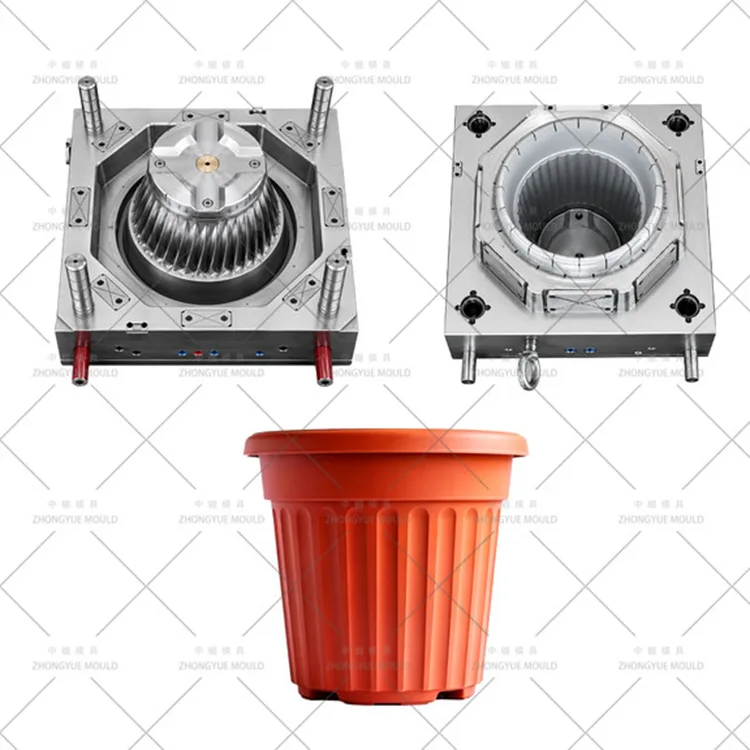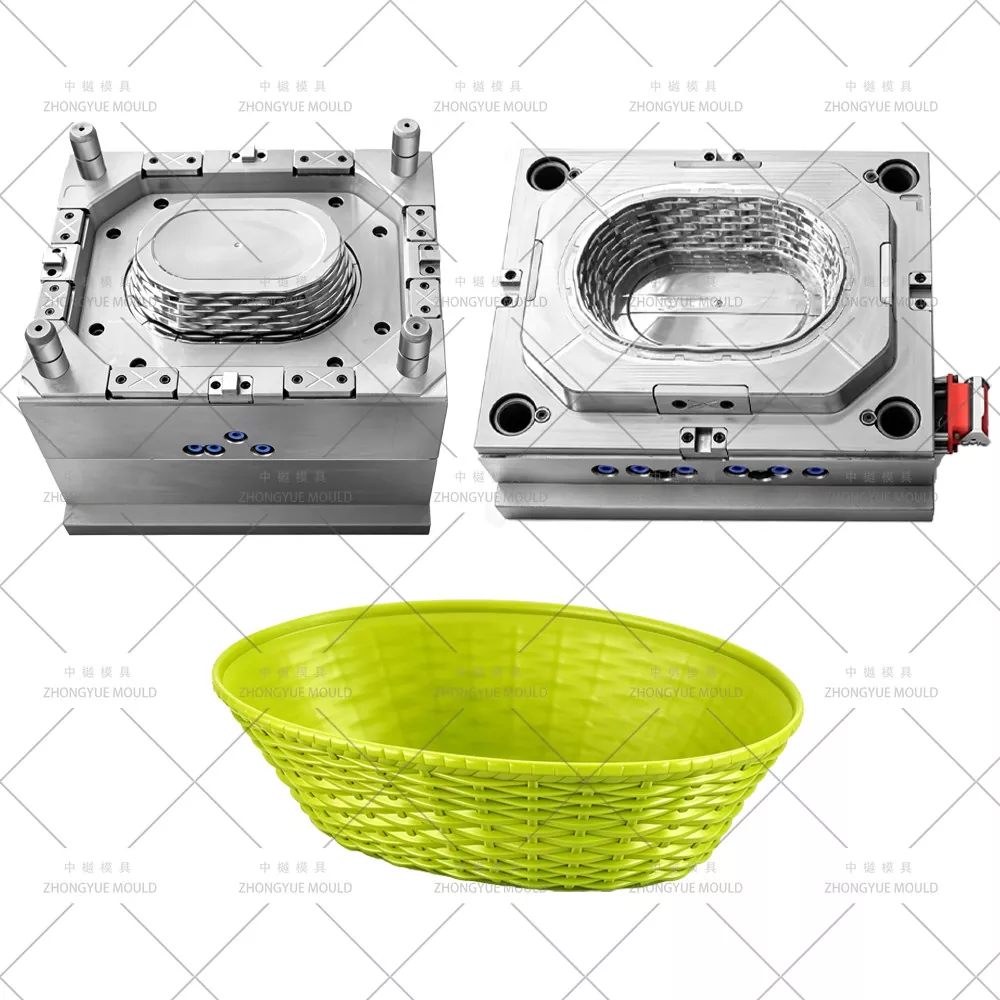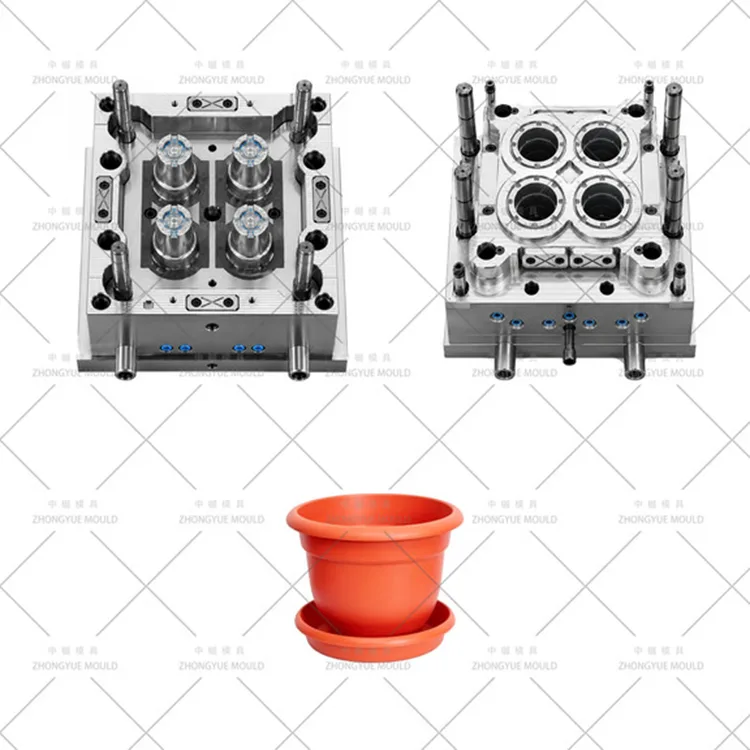

ZHONGYUE develops the Plastic Round Rattan Flower Pot Mould for manufacturers seeking attractive wicker-textured planters, stable molding performance, efficient cooling, and dependable long-run production. With optimized draft, venting, gating, and texture engineering, the mould helps turn decorative planter concepts into consistent injection-molded products.
A well-engineered flower pot mould does more than reproduce the shape of a planter. For round rattan-style pots, the mould must accurately reproduce the woven appearance while managing draft, ejection, cooling, filling, and dimensional stability. ZHONGYUE's cylindrical and tapered rattan planter mould solution is designed around these production requirements. It can support PP materials, decorative VDI rattan textures, annular cooling channels, hidden submarine gates, and suitable ejection systems. This article explains the mould structure, key engineering considerations, material selection, applications, manufacturing process, and quality factors that buyers should evaluate before ordering a custom plastic planter mould.
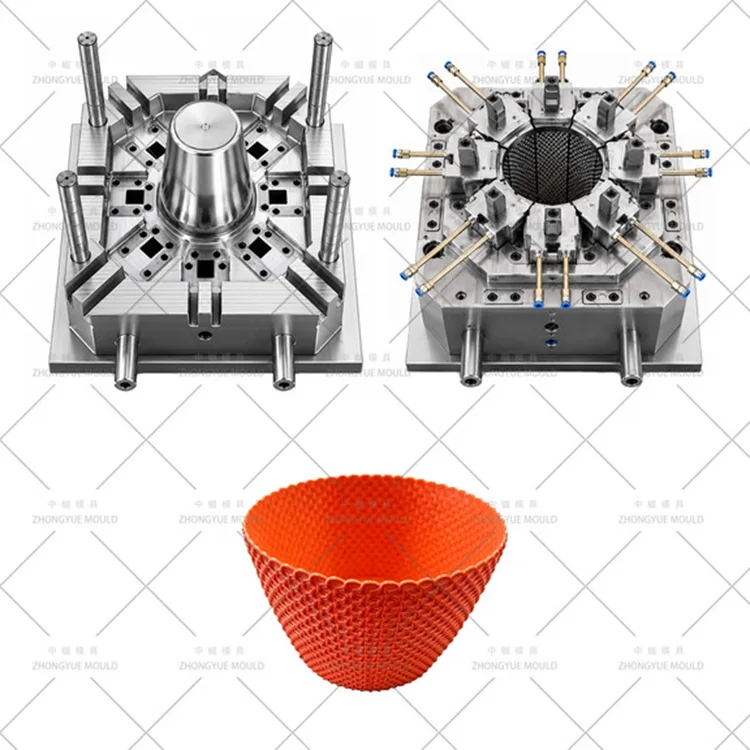
Table of Contents
- What Is a Plastic Round Rattan Flower Pot Mould?
- What Are the Key Engineering Features?
- What Specifications Should Buyers Consider?
- Which Plastic Material Is Suitable?
- Where Are Rattan-Style Flower Pots Used?
- How Is the Mould Manufactured and Validated?
- How Does Mould Design Affect Product Quality?
- How Should Buyers Select a Reliable Mould Supplier?
- Frequently Asked Questions
- How Can You Start a Custom Mould Project?
What Is a Plastic Round Rattan Flower Pot Mould?
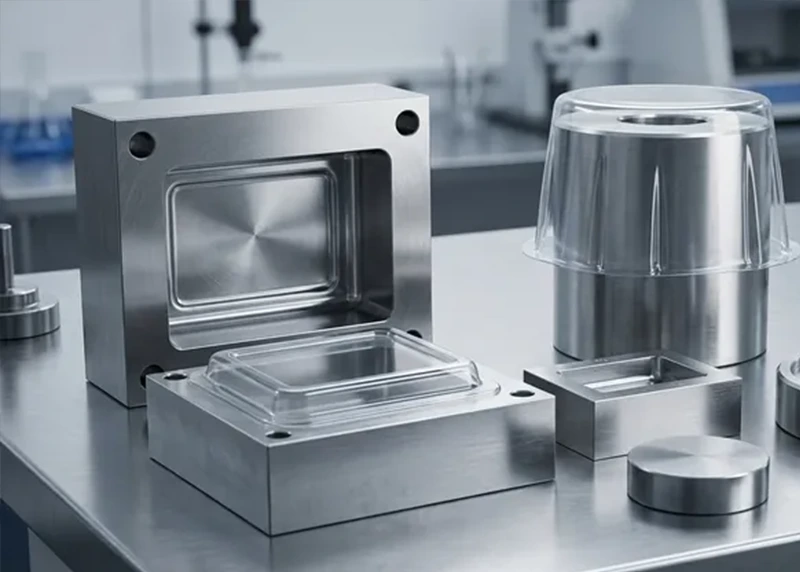
A Plastic Round Rattan Flower Pot Mould is an injection mould designed to manufacture cylindrical or slightly tapered plastic planters with an exterior surface that imitates natural rattan or wicker. Compared with a spherical rattan pot mould, the cylindrical design can generally use a simpler vertical opening structure, making it suitable for efficient injection molding.
The decorative texture is one of the most important features. The mould cavity can be engineered with EDM-generated relief and acid-etched VDI texture to reproduce a consistent woven appearance. At the same time, the core remains sufficiently smooth to support reliable part release.
Depending on the product design, the mould can also incorporate drainage structures, reinforcing ribs, hanging holes, and other functional details. These features need to be considered during the early DFM stage rather than added after the mould structure has been finalized.
For buyers evaluating a round rattan flower pot mould, the key objective is to balance decorative appearance, mould durability, production cycle time, and ease of ejection.
What Are the Key Engineering Features?
Several engineering details determine whether a textured planter mould can operate reliably in mass production.
1. Rattan Texture and Draft Design
Texture increases friction between the molded part and cavity surface. Therefore, adequate draft is essential. A carefully calculated draft angle helps the planter release without damaging the woven pattern or deforming the thin wall.
2. Deep-Cavity Vacuum Relief
A deep cylindrical core can create a vacuum effect during ejection. Vent grooves and suitable venting structures allow air to enter the space between the molded product and core, reducing sticking and helping maintain the shape of the planter.
3. Uniform Cooling
Large cylindrical parts can experience uneven cooling if the water circuit is poorly designed. Annular cooling channels around the core can improve heat removal around the circumference, helping reduce ovality, warpage, and cycle-time variations.
4. Hidden Gating
Because the outer surface carries a decorative rattan pattern, a visible gate on the textured area can reduce product appearance. Submarine gates positioned on an inner rim or suitable bottom location help keep the decorative surface clean.
5. Controlled Ejection
Thin-walled planters benefit from distributed ejection force. A stripper plate can be preferable when the product is relatively thin, while ejector pins may be suitable for thicker structures with reinforcing ribs or stronger base areas.
What Specifications Should Buyers Consider?
Before requesting a quotation, buyers should define the product geometry, expected production volume, plastic material, texture requirements, and machine conditions. The following parameters are particularly useful during mould evaluation:
| Item | Typical Consideration | Why It Matters |
|---|---|---|
| Product Diameter | Approximately 120–400 mm | Influences mould size, cavity arrangement, and injection machine requirements. |
| Mould Steel | P20, 718H, H13, 2344, S136 | Determines durability, maintenance requirements, and expected mould life. |
| Mould Type | Two-plate or three-plate | Selected according to product structure and gating requirements. |
| Gate | Submarine or pin-point gate | Helps preserve the visible rattan texture. |
| Cooling | Annular channels and optional inserts | Supports consistent cooling and dimensional stability. |
| Surface Texture | EDM and VDI rattan texture | Creates the desired woven visual effect. |
| Material | PP or PP with UV stabilization | Provides flexibility and suitable outdoor performance. |
| Cavity Quantity | 1, 2, or more depending on size | Balances production output, machine capacity, and tooling cost. |
Which Plastic Material Is Suitable?
Polypropylene (PP) is a practical choice for many rattan-style flower pots because it combines flexibility, relatively low weight, and good resistance to stress cracking. Its flexibility is also useful when releasing a textured product from the cavity.
For outdoor planters, PP can be formulated with UV stabilizers to improve resistance to long-term sunlight exposure. However, the final resin selection should be based on the planter's application, wall thickness, required appearance, environmental conditions, and injection molding process.
Material selection should therefore be discussed with the mould engineering team before steel machining begins. Resin flow behavior can affect gate position, filling balance, cooling requirements, shrinkage, and final dimensions.
Where Are Rattan-Style Flower Pots Used?
Rattan-textured planters combine decorative appearance with the manufacturing advantages of plastic injection molding. This makes them suitable for multiple horticultural and home-decor applications.
- Hanging baskets: Tapered bodies can incorporate integrated chain holes for indoor and outdoor hanging applications.
- Garden planters: Larger containers can use thicker walls and internal reinforcing ribs for improved structural performance.
- Decorative cachepots: Smaller pots can emphasize detailed surface texture and attractive appearance.
- Nursery containers: Functional designs can prioritize lightweight construction, drainage, and efficient cycle times.
- Home and garden retail products: Wicker-style textures can create a natural visual appearance while retaining the consistency of molded plastic.
How Is the Mould Manufactured and Validated?
A reliable mould project begins before machining. Engineering teams first review the product design and identify potential risks involving draft, texture release, wall thickness, filling, cooling, and ejection.
- DFM review: Analyze the 3D model or drawing and optimize draft, wall thickness, gates, vents, and cooling.
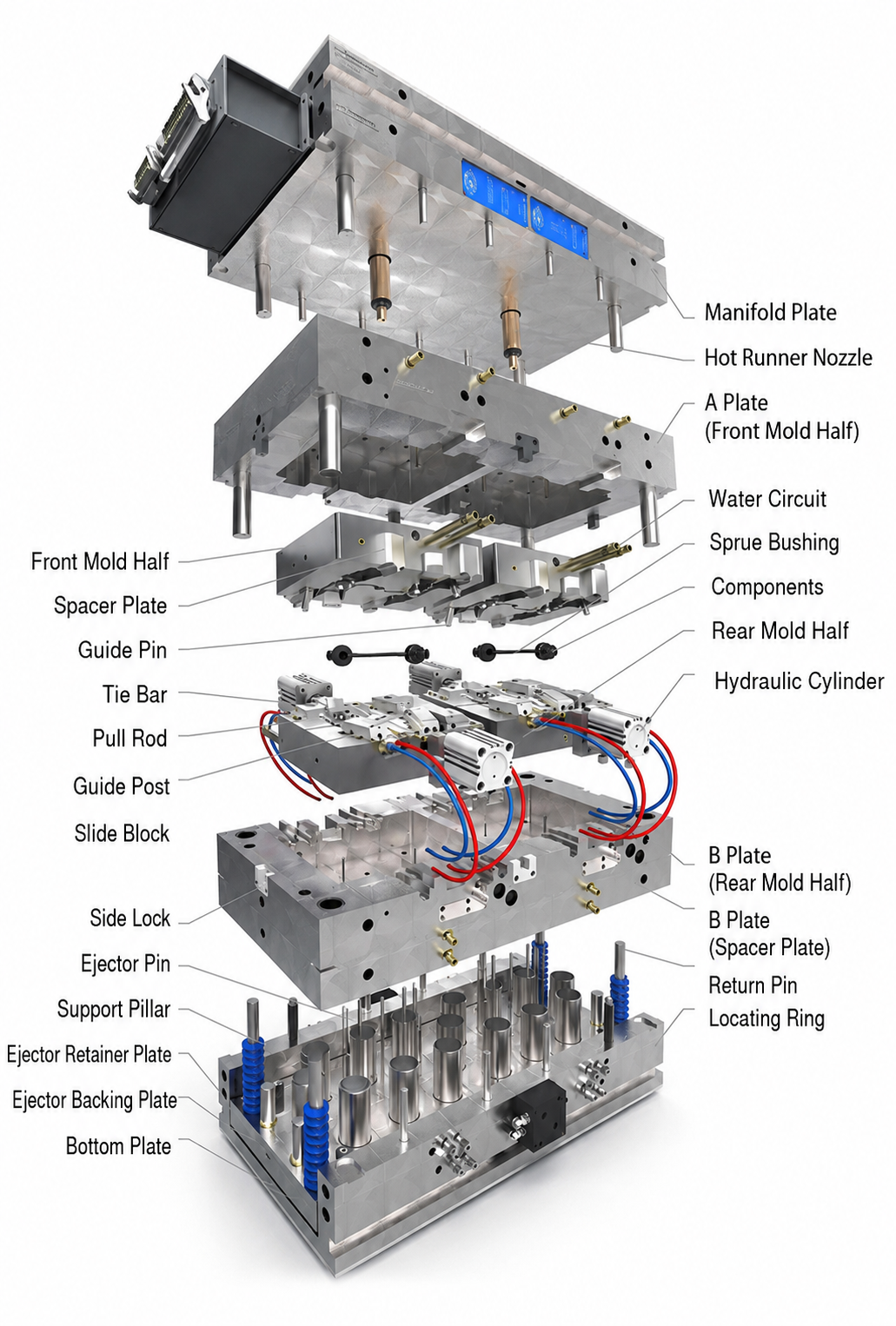
- Mould design: Develop the cavity, core, mould base, runner system, cooling system, and ejection structure using professional CAD software.
- Steel machining: CNC machining, EDM, drilling, grinding, and other processes are performed according to the approved design.
- Texture processing: The cavity receives the specified rattan or wicker pattern through controlled EDM and surface etching processes.
- T1 trial: The mould is tested using the specified resin to evaluate filling, release, texture quality, cooling, and dimensional stability.
- Correction and validation: Any identified issues are analyzed and corrected before final approval and delivery.
This staged process helps reduce unexpected modifications after production begins and gives buyers a clearer understanding of how the mould will perform in actual manufacturing conditions.
How Does Mould Design Affect Product Quality?
Flower pot appearance and production efficiency are closely connected to mould engineering. Poor draft can cause sticking or texture damage. Insufficient venting may create vacuum locking during ejection. Uneven cooling can contribute to warpage or dimensional variation, while an unsuitable gate location can leave visible marks on the decorative surface.
A professional mould design therefore treats the product as an integrated system rather than simply copying its external shape. Texture depth, draft angle, wall thickness, rib structure, cooling layout, gate position, and ejection force must work together.
For high-volume production, steel selection is equally important. Depending on expected output and maintenance requirements, manufacturers may select P20 or 718H for standard applications, while harder tool steels such as H13, 2344, or S136 can be considered when longer service life or enhanced wear resistance is required.
How Should Buyers Select a Reliable Mould Supplier?
Choosing the right supplier can significantly influence the total cost of a planter project. Buyers should look beyond the initial mould quotation and assess engineering capability, communication, trial support, and after-sales service.
Consider these factors before placing an order:
- Experience with flower pot, planter, basket, or other deep-cavity injection moulds.
- Ability to provide DFM analysis before mould manufacturing.
- Experience with textured surfaces and difficult ejection conditions.
- Cooling design capability for cylindrical or deep-core products.
- Clear mould steel, cavity number, component, and production-life specifications.
- Availability of T1 testing, samples, and technical feedback.
- Ability to provide mould documentation, spare parts, and maintenance guidance.
ZHONGYUE operates as a China injection mould manufacturer and supplier, providing mould design, manufacturing, injection molding support, and technical assistance. Its product range covers household, furniture, automotive, appliance, logistics, and other plastic injection mould applications.
Frequently Asked Questions
Can the Plastic Round Rattan Flower Pot Mould use multiple cavities?
Yes. Smaller planter designs may support multiple cavities when the product dimensions, injection machine capacity, filling balance, and cooling requirements allow it. Larger planters generally require a single-cavity configuration to maintain adequate process control.
How can the mould prevent textured pots from sticking?
Proper draft, texture design, core polishing, and vacuum-relief venting are important. For textured vertical walls, the draft must be sufficient to allow the molded part to move away from the cavity without damaging the rattan pattern.
What material is commonly recommended for this type of planter?
PP is commonly suitable because its flexibility supports texture release. For outdoor products, PP with appropriate UV stabilization may be considered according to the intended service environment.
What information is needed for a mould quotation?
A 3D model in STP, IGS, or X_T format is ideal. A 2D drawing should show key dimensions such as diameter, height, wall thickness, drainage details, and tolerance requirements. A product sample or clear texture reference can also help define the rattan surface.
Can the mould include customized hanging holes and reinforcing ribs?
Yes. Hanging holes, internal ribs, drainage structures, and other functional features can be incorporated into the mould design. Their geometry should be reviewed during DFM to ensure proper filling, ejection, cooling, and product strength.
How Can You Start a Custom Mould Project?
A successful planter mould project starts with clear product information and an engineering review. Whether you are developing a decorative indoor planter, hanging basket, nursery container, or heavy-duty garden pot, the mould should be designed around the final product, resin, production volume, and injection molding equipment.
ZHONGYUE can evaluate your planter drawing, 3D model, sample, or texture reference and help identify suitable mould construction, gating, cooling, ejection, and material options. For manufacturers seeking a dependable Plastic Round Rattan Flower Pot Mould, professional DFM and validation can reduce production risks while supporting consistent product quality. Contact ZHONGYUE today to discuss your requirements, request a customized mould solution, and contact us for engineering support and a competitive quotation.