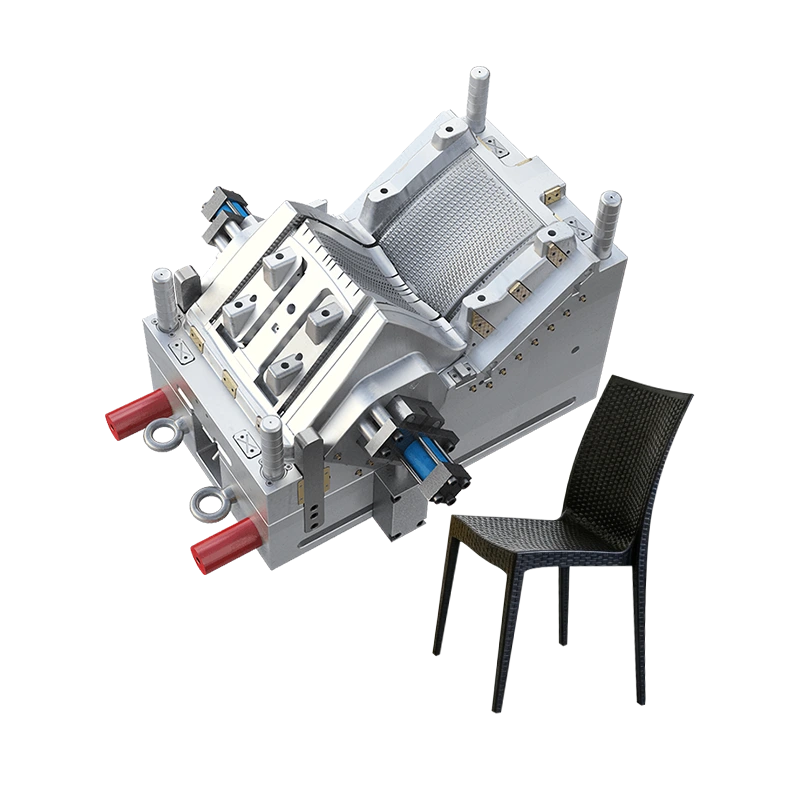
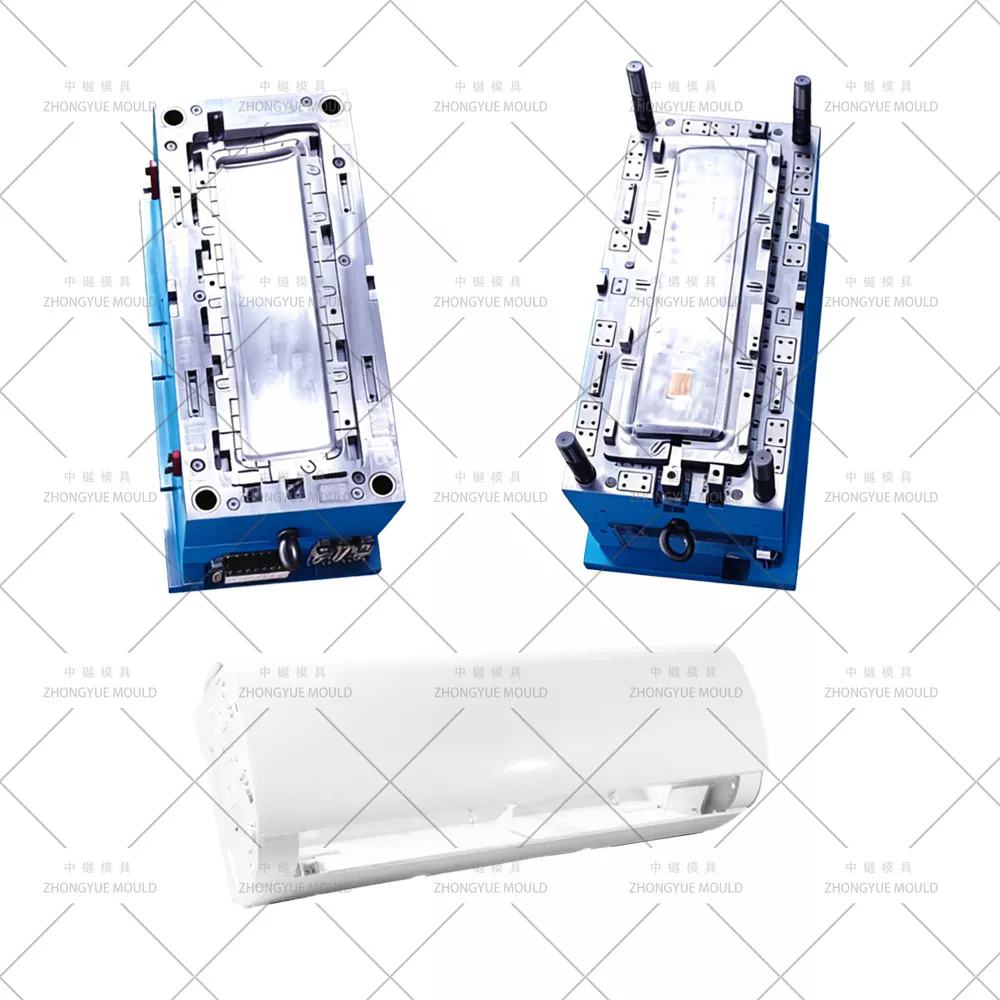
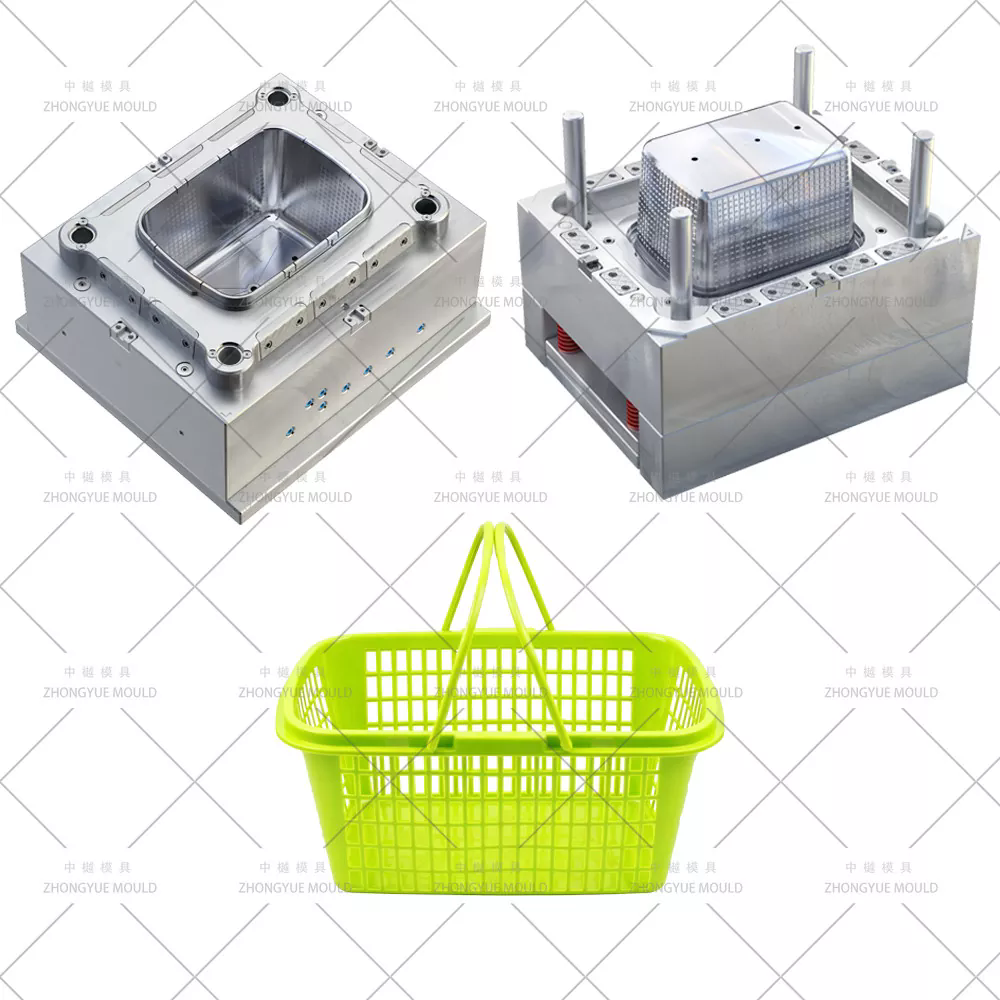
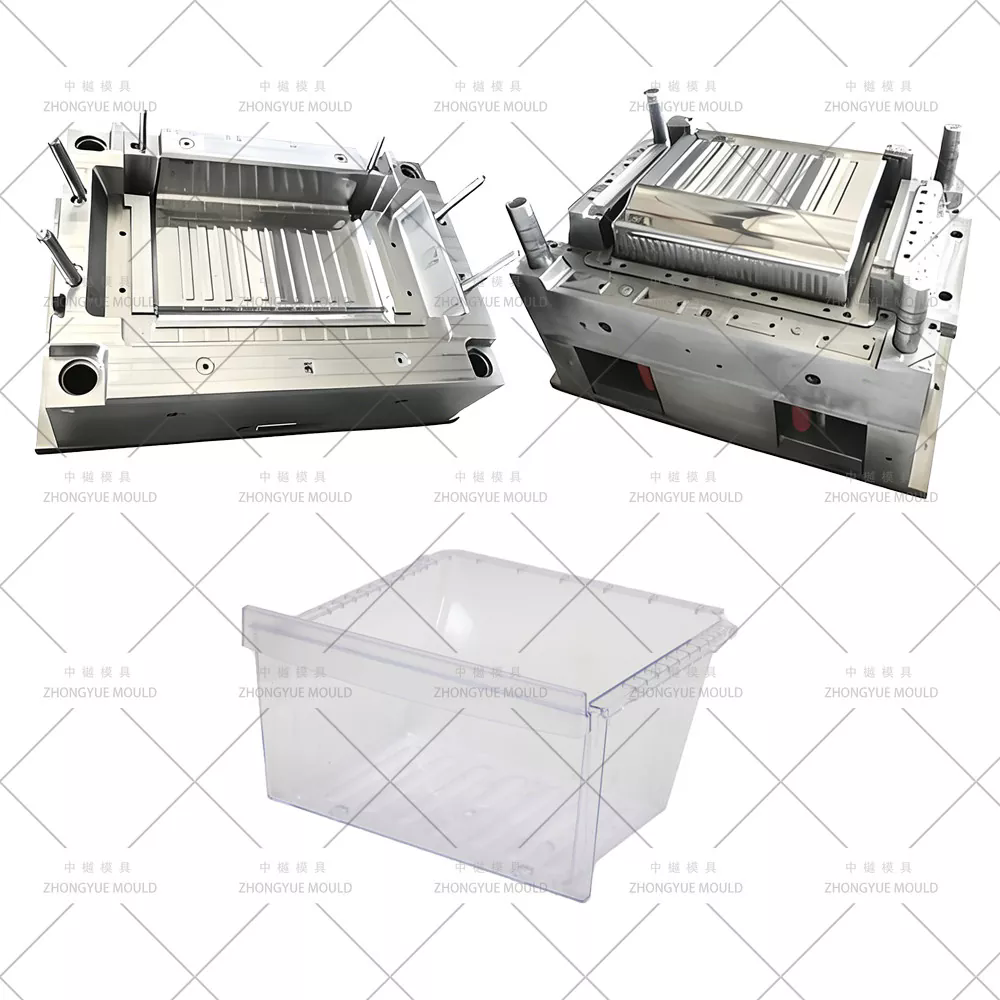
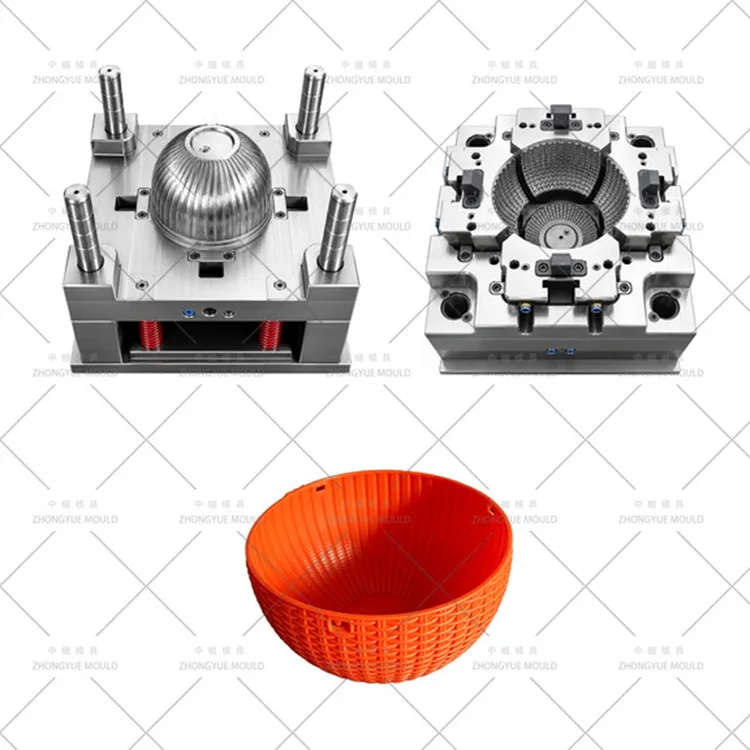
Creating attractive, durable, and comfortable outdoor furniture requires more than an appealing product design. Manufacturers also need precision injection molds capable of reproducing intricate wicker patterns while maintaining structural strength and consistent production quality. A high-performance Plastic Rattan With Arm Chair Mould is an essential solution for producing realistic rattan-style plastic armchairs. As an experienced injection mold manufacturer, ZHONGYUE develops customized molding solutions featuring advanced slider systems, deep rattan textures, optimized cooling channels, and reliable ejection structures to help furniture manufacturers achieve efficient and stable production.
A plastic rattan armchair combines the traditional appearance of woven wicker with the durability and convenience of injection-molded plastic. However, manufacturing this type of furniture involves several technical challenges, including complex surface textures, hollow armrests, internal reinforcing ribs, and difficult undercut structures.
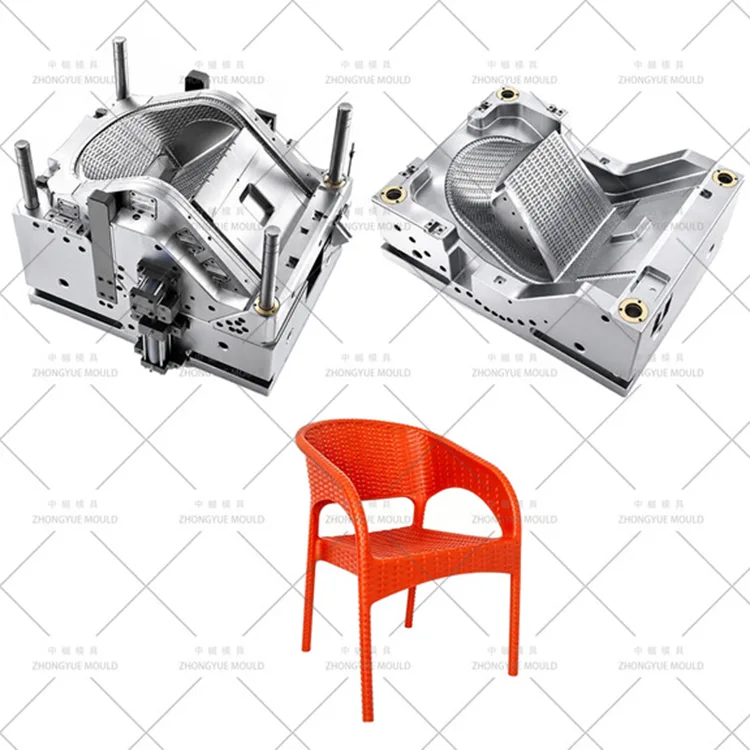
A Plastic Rattan With Arm Chair Mould is a specialized injection molding tool designed to manufacture plastic chairs featuring woven-rattan-inspired surface patterns and integrated armrests. Unlike conventional plastic chair molds, this type of tooling must reproduce detailed three-dimensional wicker textures while accommodating complex geometries and internal structural reinforcement.
The finished chair is designed to provide the visual appeal of traditional rattan furniture without the maintenance requirements associated with natural woven materials. Manufacturers commonly use these chairs in outdoor patios, gardens, restaurants, hotels, balconies, and commercial seating environments.
Several structural characteristics make this mold different from standard furniture tooling:
Depending on the chair design, manufacturers can develop molds for classic bistro armchairs, outdoor conversation chairs, and contemporary patio furniture. Each solution should be customized according to the product's dimensions, texture requirements, resin characteristics, and expected production volume.
Surface appearance is one of the most important factors influencing the commercial value of synthetic rattan furniture. Customers often choose plastic wicker chairs because they combine decorative appeal with practical durability.
To achieve this appearance, mold manufacturers must create precise three-dimensional patterns directly inside the cavity rather than relying on simple printed or painted finishes.
Traditional rattan-inspired designs may include round-cane weaving, flat-weave structures, and interlocking decorative patterns. These details require advanced electrical discharge machining (EDM) and chemical etching technologies to reproduce consistent surface geometry.
For the mold described by ZHONGYUE, the rattan texture depth can reach approximately 0.5–1.0 mm, depending on the selected design. Consistency across the seat, backrest, and armrests is essential for achieving a natural woven appearance.
Deep textures create additional friction during part ejection. If the draft angle is insufficient, the molded plastic may stick to the cavity, resulting in surface damage, dragging marks, or incomplete release.
ZHONGYUE's engineering approach considers a total draft angle of approximately 4–6 degrees for deep wicker textures, with the final value adjusted according to texture depth, resin properties, and component geometry.
Armrests and frame transitions often contain curved surfaces and complex parting lines. Engineers must coordinate the texture direction and cavity geometry to minimize visible pattern interruptions.
Accurate CNC machining, EDM processing, and mold fitting help maintain a consistent decorative finish throughout the entire chair.
A high-quality Plastic Rattan With Arm Chair Mould requires an integrated engineering strategy. Surface texture, slider movement, material flow, cooling performance, and ejection must work together to produce reliable results.
Hollow armrests and complicated frame geometries frequently create undercuts that cannot be released using a conventional two-plate mold alone.
ZHONGYUE's mold design can incorporate three to five sliding cores combined with lifter mechanisms. These components form complex internal structures during injection and retract in a controlled sequence before the chair is ejected.
Important design considerations include:
Intricate wicker patterns contain numerous narrow channels through which molten plastic must flow. Air trapped in these areas can cause short shots, burn marks, and incomplete surface reproduction.
To address these problems, engineers can incorporate parting-line vents with a typical depth of 0.01–0.015 mm, together with sintered porous steel inserts at critical air-trapping locations.
Proper venting helps remove trapped air and improves the filling performance of high-flow polypropylene materials.
Uneven cooling can cause shrinkage differences, warpage, and extended molding cycles. This is particularly challenging when thin decorative shells are supported by thicker internal ribs.
Strategically positioned baffles, peripheral cooling channels, and beryllium copper (BeCu) inserts can improve heat transfer around difficult areas. BeCu inserts are particularly useful near rib intersections where localized heat accumulation may occur.
Gate placement influences filling balance, weld-line positioning, and the final appearance of the chair. Hidden submarine gates on the inner rim or base can reduce visible gate marks. Fan gates may also be considered for selected complex geometries.
Ejection systems can combine ejector sleeves for hollow arms or legs with long ejector pins positioned behind reinforcing ribs. This arrangement helps distribute ejection forces and reduce deformation.
Material selection directly influences mold filling, product strength, dimensional stability, and outdoor service performance. High-flow polypropylene is commonly recommended for intricate rattan-style chair structures because it can fill narrow decorative channels and thin-walled sections more effectively.
| Item | Technical Specification |
|---|---|
| Mold Name | Plastic Rattan With Arm Chair Mould |
| Cavity Steel | 718H (HRC 33–38) or 2738HH |
| Core Steel | 718H |
| Slider and Lifter Steel | H13 / 2344 ESR, nitrided |
| Mold Base | LKM / DME heavy-duty mold base |
| Typical Mold Weight | Approximately 4.0–8.0 tons, depending on chair dimensions |
| Cavity Configuration | 1 × 1 standard |
| Runner System | Cold runner standard; optional hot runner |
| Cooling System | BeCu inserts, baffles, and peripheral channels |
| Surface Treatment | Deep EDM rattan texture and acid etching |
| Core Surface Finish | SPI A2 high polish |
| General Tolerance | Approximately ±0.2 mm |
| Texture Depth Consistency | Approximately ±0.05 mm |
| Armrest Alignment | Approximately ±0.1 mm |
| Expected Mold Life | 500,000 shots or more, depending on steel and maintenance |
Note: These are representative engineering specifications for this mold category. Actual configurations, tolerances, and service life depend on the final product design, steel treatment, molding conditions, and maintenance practices.
| Material | Main Characteristics | Typical Application |
|---|---|---|
| UV-Stabilized PP | Good flowability, lightweight structure, and outdoor weathering options | Outdoor rattan armchairs |
| High-Flow PP | Improved filling performance for intricate and thin-walled structures | Complex wicker textures and reinforcing ribs |
| FRPP | Improved stiffness depending on fiber content and formulation | Applications requiring additional structural rigidity |
For intricate wicker patterns, high-flow UV-stabilized PP with a melt flow rate around 12–18 g/10 min under the specified test conditions is one recommended option. The final resin grade should always be selected through material testing and mold-flow evaluation.
Production efficiency depends on more than the injection machine's speed. A well-engineered mold must ensure balanced filling, predictable cooling, stable ejection, and repeatable mechanical movements.
High-flow PP helps molten material enter narrow rattan-pattern channels and fill thin structural sections. Mold-flow analysis can identify potential short shots, weld lines, air traps, and pressure concentration before mold manufacturing begins.
Cooling frequently represents a significant portion of the injection molding cycle. BeCu inserts and properly designed cooling channels help reduce localized temperature differences, especially around thick rib intersections.
Multi-slider movements must follow a reliable sequence. Hydraulic or mechanical actuation can be selected according to the slider stroke, mold layout, and production requirements.
Stable slider operation helps reduce cycle interruptions and minimizes the risk of damage to complicated molded structures.
| Potential Defect | Possible Cause | Recommended Solution |
|---|---|---|
| Incomplete texture filling | Insufficient flow or poor venting | Optimize resin flow, injection parameters, and vent locations |
| Burn marks | Trapped air in deep texture channels | Improve parting-line vents and porous steel inserts |
| Sink marks | Thick reinforcing ribs and uneven cooling | Optimize rib thickness and cooling insert positions |
| Surface dragging | Insufficient draft or difficult ejection | Adjust draft angles and polish the core surface |
| Warpage | Uneven shrinkage and temperature distribution | Improve cooling balance and molding parameters |
| Slider mismatch | Incorrect fitting or mechanical wear | Improve slider precision and maintenance procedures |
Manufacturing a precision Plastic Rattan With Arm Chair Mould requires a systematic process that connects product engineering with machining, assembly, testing, and final validation.
Engineers review the customer's 3D model to evaluate wall thickness, texture depth, draft angles, slider requirements, gate locations, and ejection feasibility.
Using software such as UG NX, SolidWorks, AutoCAD, and Moldflow, the engineering team can identify potential manufacturing risks before steel processing begins.
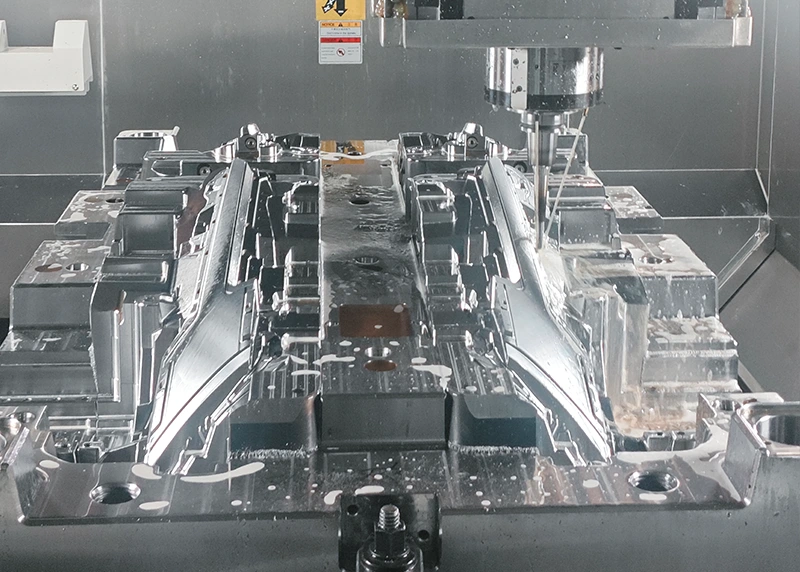
Suitable mold steels are selected according to the expected production volume and required surface quality. CNC machining creates the main cavity and core structures, while EDM and chemical etching reproduce the detailed rattan patterns.
H13 or equivalent hardened slider components are machined, treated, and fitted to ensure accurate movement. Engineers check clearances, guide systems, locking mechanisms, and texture transitions across the parting surfaces.
Cooling channels, BeCu inserts, ejector sleeves, and ejector pins are inspected to confirm that they function correctly. Hydraulic connections and mechanical movements are also checked before trial production.
The first mold trial evaluates filling performance, texture reproduction, surface quality, dimensions, and slider operation. Trial samples can be inspected using dimensional measurement equipment, with relevant inspection reports and trial videos provided according to project requirements.
After necessary adjustments, the mold undergoes final inspection and preparation for shipment. Supporting documentation can include hydraulic diagrams, maintenance instructions, and recommended spare parts for wear-prone slider components.
This systematic approach helps ensure that the mold is ready for reliable production and future maintenance.
Plastic rattan armchairs are widely used in residential and commercial furniture markets. Their decorative appearance and practical construction make them suitable for multiple indoor and outdoor environments.
Compared with traditional natural rattan furniture, injection-molded synthetic rattan chairs offer several potential manufacturing and product advantages:
For furniture manufacturers, selecting an appropriately engineered mold is an important investment in product consistency, production stability, and long-term competitiveness.
Choosing an injection mold supplier is a critical decision for furniture manufacturers. A supplier should understand not only conventional mold manufacturing but also the specific challenges associated with deep wicker textures and complex armchair geometries.
Before placing an order, consider the following factors:
ZHONGYUE MOULD provides customized injection mold manufacturing services for plastic furniture and other industrial applications. Its engineering approach focuses on product structure, mold performance, and practical manufacturing requirements.
Explore more solutions through the Plastic Chair Mould product category or learn more about ZHONGYUE MOULD and its injection mold manufacturing capabilities.
A: The main differences are its deep three-dimensional wicker textures, hollow armrest structures, complex undercuts, and dense internal reinforcing ribs. These features require specialized slider systems, precise venting, and optimized cooling arrangements.
A: High-flow UV-stabilized polypropylene (PP) is a recommended option because it can fill intricate texture channels and thin-walled structures. Fiberglass-reinforced PP may also be considered when additional stiffness is required. Final selection depends on the product's structural and environmental requirements.
A: Multiple sliders help form hollow armrests, undercuts, and complicated frame sections that cannot be released through a simple opening and closing movement. They retract before ejection, allowing the molded chair to be removed without damaging its geometry.
A: Proper venting is essential. Engineers can use parting-line vents and sintered porous steel inserts at locations where air becomes trapped. Appropriate injection speed, temperature, and material flow conditions also help reduce burning risks.
A: Mold life depends on steel selection, heat treatment, operating conditions, and maintenance. According to the representative specifications, a 718H and H13 slider configuration can target at least 500,000 shots, while a fully hardened configuration may target 1,000,000 shots or more.
A: Yes. Manufacturers can customize chair dimensions, armrest geometry, rattan patterns, surface textures, and structural details according to the product design. A 3D model helps engineers evaluate feasibility and prepare a suitable mold solution.
A: Customers should provide a 3D product model in STP or IGS format, preferred plastic material, rattan pattern requirements, expected annual production volume, and any special dimensional or appearance requirements. These details help the engineering team evaluate the mold structure and manufacturing cost.
A reliable Plastic Rattan With Arm Chair Mould plays an important role in producing attractive, structurally consistent, and commercially competitive outdoor furniture. From realistic wicker textures and multi-slider mechanisms to advanced venting, BeCu cooling inserts, and precision ejection systems, every engineering detail contributes to final product quality and manufacturing efficiency.
For furniture brands, wholesalers, and injection molding manufacturers planning to develop new synthetic rattan seating products, working with an experienced mold supplier can reduce design risks and improve production reliability. ZHONGYUE combines professional mold engineering, precision machining, and customized manufacturing solutions to support different plastic furniture projects. Whether you need a classic wicker armchair mold or a customized outdoor seating solution, contact us today with your 3D drawings and production requirements to discuss your project, receive expert technical advice, and obtain a competitive quotation from ZHONGYUE MOULD.