As decorative planters become increasingly popular in luxury landscaping, commercial properties, and modern garden design, manufacturers need tooling that combines visual appeal with consistent production quality. ZHONGYUE specializes in the Plastic Scalloped Large Size Flower Pot Mould, providing advanced injection mold solutions for large planters featuring elegant petal-shaped edges, precise contours, and durable structures. With specialized lifter mechanisms, optimized cooling systems, and professional mold engineering, manufacturers can produce attractive large flower pots while maintaining dimensional accuracy and production efficiency.
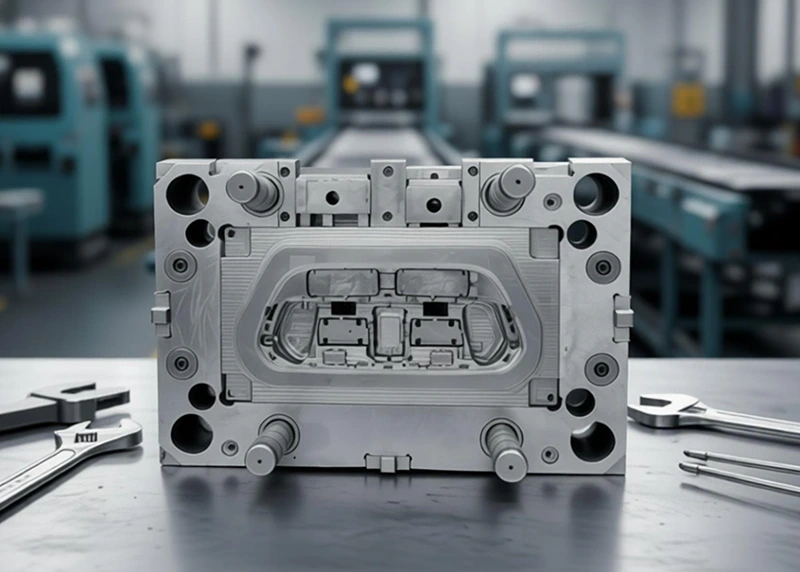
A Plastic Scalloped Large Size Flower Pot Mould is a specialized injection molding tool designed to manufacture large decorative planters with distinctive wavy, fluted, or petal-shaped rims. Unlike conventional flower pot molds, this tooling requires advanced undercut release mechanisms, synchronized angle lifters, and effective cooling strategies to maintain product geometry and prevent deformation.
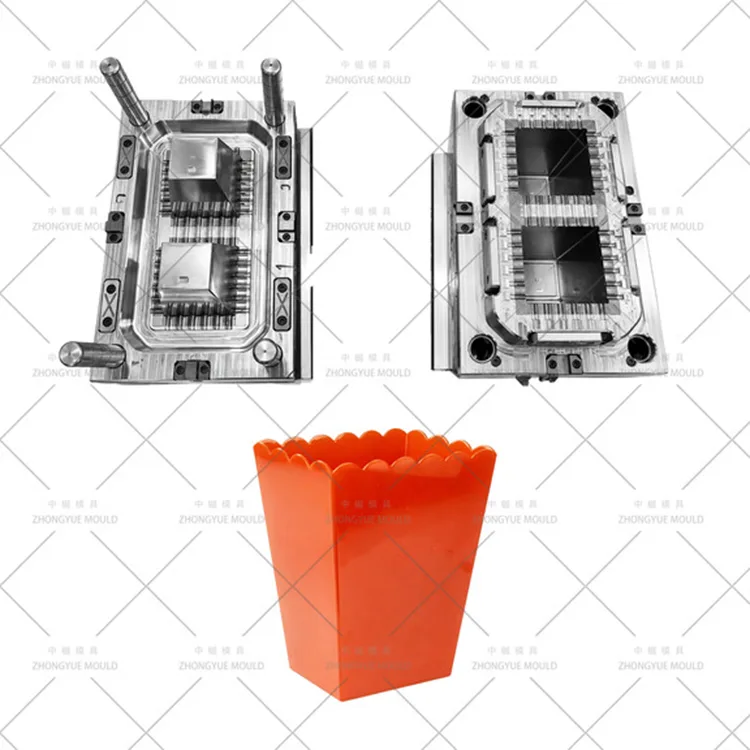
1. What Is a Plastic Scalloped Large Size Flower Pot Mould?
2. Why Is Scalloped Flower Pot Mold Design More Challenging?
3. Key Technical Specifications and Mold Configurations
4. How Do Advanced Lifter Mechanisms Improve Mold Performance?
5. Which Plastic Materials Are Suitable for Large Scalloped Planters?
6. What Are the Main Applications of Scalloped Flower Pots?
7. How Does ZHONGYUE Manufacture and Validate These Molds?
8. How to Choose the Right Flower Pot Injection Mold Manufacturer?
A Plastic Scalloped Large Size Flower Pot Mould is an injection molding tool specifically engineered to manufacture large decorative plastic planters with repeating curved edges around the upper rim. These distinctive contours resemble flower petals, ocean waves, or traditional ornamental patterns, creating an elegant appearance that differs from standard cylindrical flower pots.
Typically, these large planters have diameters ranging from 300 mm to 800 mm and heights of approximately 300 mm to 600 mm, depending on the product design and intended application.
The main characteristics include:
For manufacturers targeting premium garden decoration markets, this type of flower pot injection mold offers an opportunity to combine sophisticated product styling with repeatable manufacturing performance.
Manufacturing a large flower pot with a decorative scalloped rim involves several engineering challenges. The most significant difference between conventional flower pot molds and scalloped planter molds is the presence of undercuts around the upper edge.
The alternating raised petals and recessed valleys create negative draft areas that prevent the finished plastic component from being released through ordinary straight ejection.
To overcome this problem, engineers typically use multiple angle lifters or a collapsible core. These mechanisms retract during mold opening, allowing the molded product to separate without damaging its decorative edge.
Large flower pots often feature wide upper flanges that are vulnerable to uneven cooling and internal molding stress. If the temperature distribution is inconsistent, the rim may twist, cup, or become uneven.
ZHONGYUE addresses this challenge through carefully designed cooling channels, including baffles, peripheral bubblers, and beryllium copper (BeCu) inserts near the rim area.
Every scallop must maintain consistent dimensions, spacing, and curvature. Small variations between lifter sections can create visible differences in the finished product.
High-precision CNC machining, accurate lifter fitting, and detailed dimensional inspection are therefore essential for achieving a uniform decorative appearance.
Multiple lifters generate considerable mechanical forces during injection and mold operation. A heavy-duty mold base, reinforced support pillars, and reliable guide systems help maintain alignment and reduce the risk of mold deflection or flash.
Choosing the correct mold configuration is essential for achieving stable production, reliable demolding, and consistent product dimensions. ZHONGYUE provides customized Plastic Scalloped Large Size Flower Pot Mould solutions according to product geometry, material requirements, and production expectations.
The following table summarizes the principal technical specifications and available configurations.
| Technical Item | Specification / Options |
|---|---|
| Mold Type | Two-plate injection mold with multiple angle lifters or collapsible core |
| Cavity and Core Steel | 718H or 2738HH |
| Lifter Material | H13 or 2344 ESR |
| Mold Base | LKM / DME heavy-duty mold base |
| Mold Weight | Approximately 3.0–10.0 tons, depending on design |
| Cavity Configuration | 1×1 single cavity |
| Runner System | Cold runner or hot runner with sequential valve gates |
| Gate Type | Fan gate or edge gate |
| Ejection System | Ejector pins, ejector sleeves, and synchronized lifter actuation plate |
| Cooling System | BeCu inserts, core baffles, peripheral bubblers, and isolated cooling circuits |
| Surface Finish | VDI 27–30 texture or SPI B1/B2 polish |
| General Tolerance | ±0.2 mm |
| Scallop Pitch Repeatability | ±0.1 mm |
| Rim Flatness | ≤0.5 mm |
| Typical Lead Time | 60–85 days |
For large decorative planters, a single-cavity configuration is generally preferred because the large mold dimensions and complex undercut release mechanisms make multi-cavity tooling considerably more difficult to engineer.
Material selection for the mold itself also affects tooling durability and maintenance requirements.
| Mold Steel | Hardness | Reference Mold Life |
|---|---|---|
| P20 | HRC 28–33 | >300,000 shots |
| 718 | HRC 33–36 | >500,000 shots |
| H13 | HRC >43 | >800,000 shots |
| 2344 | HRC >48 | >800,000 shots |
| S136 | HRC 48–52 | >1,000,000 shots |
Actual mold life depends on steel treatment, processing conditions, maintenance frequency, and production environment. The final steel selection should be confirmed according to the specific project requirements.
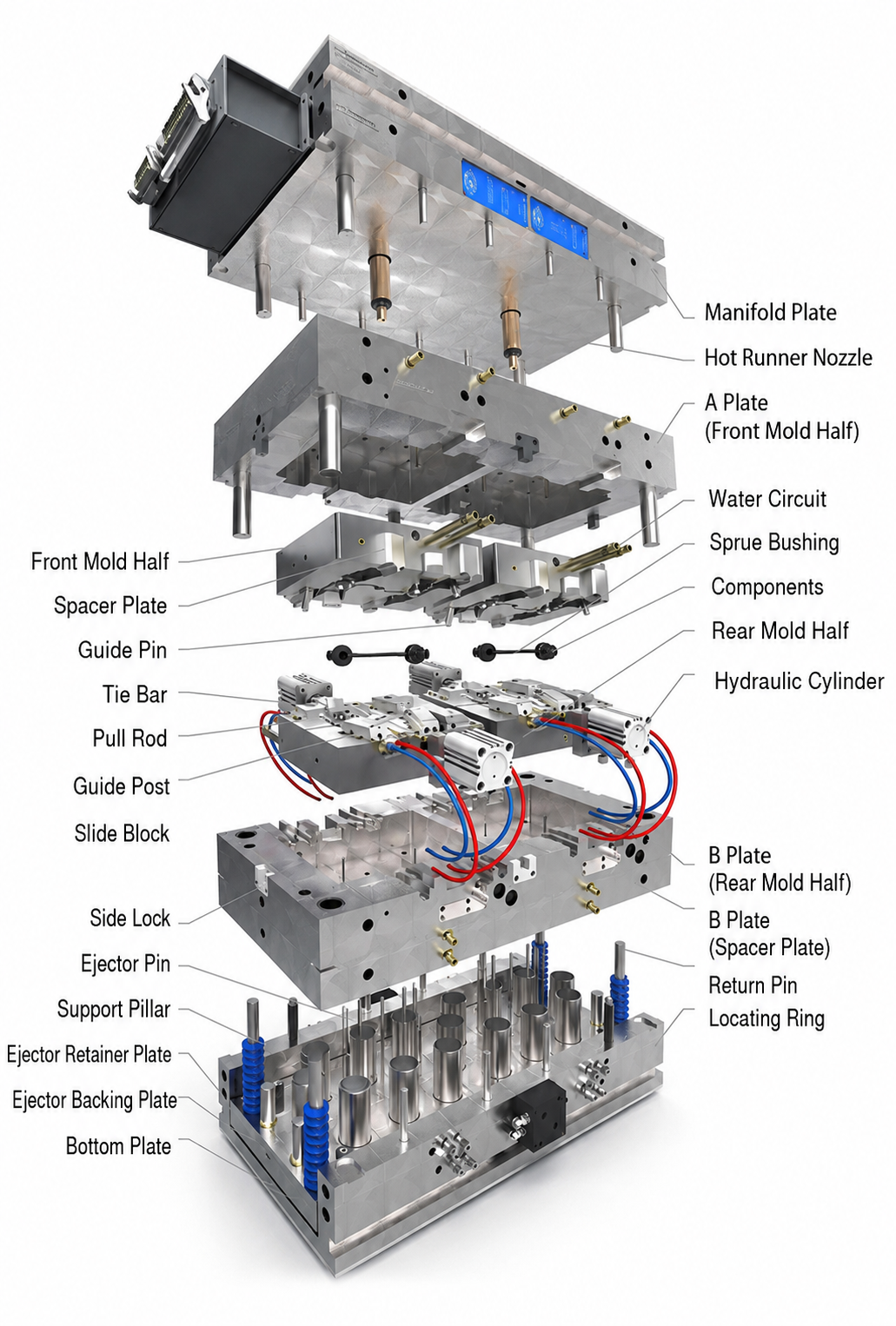
The lifter system is one of the most important engineering components in a Plastic Scalloped Large Size Flower Pot Mould. Its primary function is to release the undercut sections of the finished planter without damaging the decorative rim.
ZHONGYUE can design 8–16 individual angle lifters arranged in a circular configuration. Each lifter forms a corresponding section of the scalloped profile.
During mold opening, the lifters move outward or inward according to their designed movement direction, creating sufficient clearance for product release. A synchronized actuation plate helps coordinate the movement of all lifter components.
The main advantages include:
For designs with tighter scallop spacing or more complicated undercut profiles, a collapsible core may provide a suitable alternative.
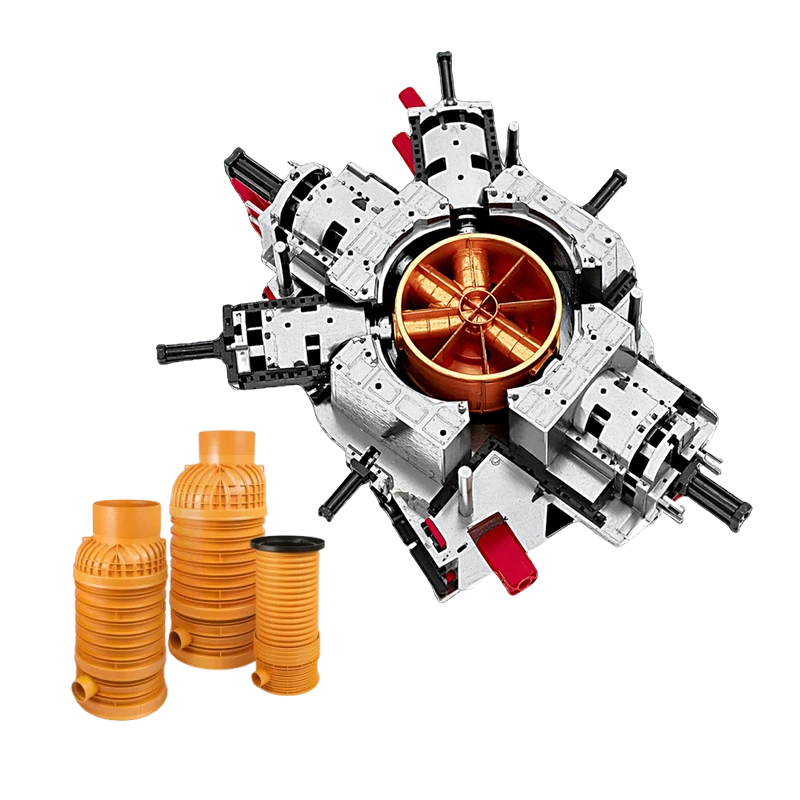
This system uses segmented core sections connected to a central mechanical arrangement. During demolding, the core segments contract to reduce their effective diameter and release the molded product.
The choice between angle lifters and collapsible cores depends on the number of scallops, undercut depth, product dimensions, and required release clearance.
Because large planter molds contain multiple moving components, accurate synchronization is essential. Engineers must evaluate lifter travel, interference risks, contact surfaces, and mechanical strength before manufacturing.
Computer-aided design and motion simulation help identify potential problems early, reducing the likelihood of costly modifications during mold trials.
The selected plastic material directly influences planter rigidity, weather resistance, surface appearance, and manufacturing performance. Large decorative flower pots require materials capable of maintaining their shape under different environmental and loading conditions.
ZHONGYUE supports several material options for this type of injection mold.
| Plastic Material | Main Characteristics | Recommended Applications |
|---|---|---|
| UV-Stabilized PP | Lightweight, economical, and suitable for outdoor applications with appropriate UV stabilization | Garden planters and municipal landscaping |
| Fiberglass Reinforced PP (FRPP) | Improved stiffness and structural rigidity compared with standard PP | Large planters and heavy-duty decorative applications |
| Premium ABS | Good dimensional stability, surface quality, and design flexibility | Premium decorative planters and architectural applications |
When selecting a material for a large scalloped flower pot, manufacturers should evaluate the following factors:
For a large planter with a diameter of approximately 600 mm, FRPP or premium ABS may be considered when greater rigidity and dimensional stability are required. The final choice should be verified through material testing and mold trials.
Large scalloped flower pots combine decorative appeal with practical planting functionality. Their distinctive rim geometry makes them suitable for projects where landscaping products contribute to the overall architectural design.
Large ornamental planters are frequently used around residential entrances, driveways, courtyards, and landscaped public areas. Classic petal-shaped rims complement traditional architectural styles while providing an attractive planting container.
Hotels, resorts, and hospitality developments often require decorative planters for entrances, outdoor dining spaces, poolside areas, and landscaped walkways. Premium finishes and customized colors help maintain a consistent design theme.
Public gardens and urban landscaping projects require durable planting containers that can withstand regular outdoor exposure. UV-stabilized PP and reinforced plastic materials are potential options for these environments.
Scalloped urn-style planters can reproduce traditional decorative elements associated with Victorian and classical architectural designs. Accurate scallop geometry is especially important when producing coordinated planter collections for restoration projects.
The following table summarizes typical application requirements.
| Market Segment | Typical Product Requirements | Suggested Material |
|---|---|---|
| Luxury Real Estate | Large decorative planters with elegant petal edges | FRPP |
| Five-Star Hotels | Premium appearance and customized surface finishes | Premium ABS |
| Municipal Gardens | Outdoor durability and structural stability | UV-Stabilized PP |
| Historic Restoration | Accurate classical profiles and consistent decorative details | FRPP or ABS |
Reliable injection mold manufacturing requires more than accurate machining. Every stage, from initial product analysis to final mold testing, must be carefully coordinated to ensure that the tooling meets the customer's technical and production requirements.
ZHONGYUE follows a structured manufacturing and validation process for complex scalloped flower pot molds.
Engineers review the 3D product model, scallop geometry, undercut depth, wall thickness, and demolding requirements. Lifter movement and potential mechanical interference are evaluated before steel cutting.
Moldflow analysis can also be used to study filling, packing, cooling, and potential warpage behavior.
The cavity, core, and supporting components are manufactured using CNC machining and other precision processing equipment. Cooling channels and BeCu inserts are incorporated according to the approved mold design.
H13 or 2344 ESR lifters are precisely machined, treated, and fitted to the corresponding cavity sections. Careful fitting helps ensure smooth movement and consistent transitions between adjacent scallops.
After assembly, the synchronized lifter mechanism and ejection system are tested. Initial molding trials evaluate:
ZHONGYUE can provide trial videos, molded samples, and CMM inspection reports to support project evaluation.
Following validation, the mold is prepared for shipment using heavy-duty packaging. Maintenance schedules, relevant hydraulic schematics where applicable, and recommended spare parts for lifter systems can be provided to support subsequent production.
Selecting an experienced injection mold manufacturer is essential when developing large decorative planters with complicated undercuts and demanding dimensional requirements.
Before placing an order, buyers should consider several important factors:
ZHONGYUE focuses on customized plastic injection molds, combining mold design, precision manufacturing, and technical validation to support customers developing complex household, garden, and decorative plastic products.
For more information about related tooling solutions, explore the Plastic Flower Pot Mould category and discover additional plastic injection mold manufacturing solutions.
A: The product diameters typically range from 300 mm to 800 mm, while pot heights can range from approximately 300 mm to 600 mm. Customized dimensions are available according to the customer's product design.
A: The petal-shaped rim creates undercut sections that cannot be released through conventional straight ejection. Multiple angle lifters or a collapsible core allow these areas to retract and release the molded product safely.
A: For large planters exceeding 300 mm in diameter, a 1×1 single-cavity configuration is generally recommended. The large mold dimensions and complicated lifter mechanisms make multi-cavity configurations difficult to implement economically and mechanically.
A: Fiberglass Reinforced PP (FRPP) and premium ABS are potential choices when greater rigidity and dimensional stability are required. UV-stabilized PP may also be suitable depending on the product structure and intended application.
A: Effective cooling design is essential. BeCu inserts, internal baffles, peripheral bubblers, and optimized packing parameters help improve temperature consistency and reduce warpage around the wide upper rim.
A: Available finishes include VDI 27–30 leather-grain textures, stone-like textures, and SPI B1/B2 polishing. The final surface treatment can be customized according to the product's decorative requirements.
A: The typical lead time is approximately 60–85 days. The actual schedule depends on product complexity, lifter machining, steel selection, mold assembly, and trial requirements.
A: Buyers should prepare a 3D product drawing in STP or IGS format and provide the following information:
Providing complete project information helps engineers evaluate the tooling structure and prepare a more accurate quotation.
A high-quality Plastic Scalloped Large Size Flower Pot Mould requires specialized engineering to overcome complex undercuts, large-rim warpage, deep-core cooling challenges, and decorative profile accuracy requirements. From synchronized angle lifters and collapsible core systems to precision steel machining and optimized cooling circuits, every design detail contributes to reliable production performance.
ZHONGYUE provides customized large flower pot injection mold solutions designed around product geometry, material characteristics, and manufacturing requirements. Whether you are developing classical ornamental urns, modern wavy-rim planters, or premium landscape decoration products, selecting the right mold engineering partner can make a significant difference in product quality and production efficiency. If you are planning a new planter manufacturing project or need a customized tooling solution, contact us today with your 3D drawings and technical requirements. Our engineering team is ready to discuss your project, evaluate the mold design, and help you develop a reliable Plastic Scalloped Large Size Flower Pot Mould for your target market.